



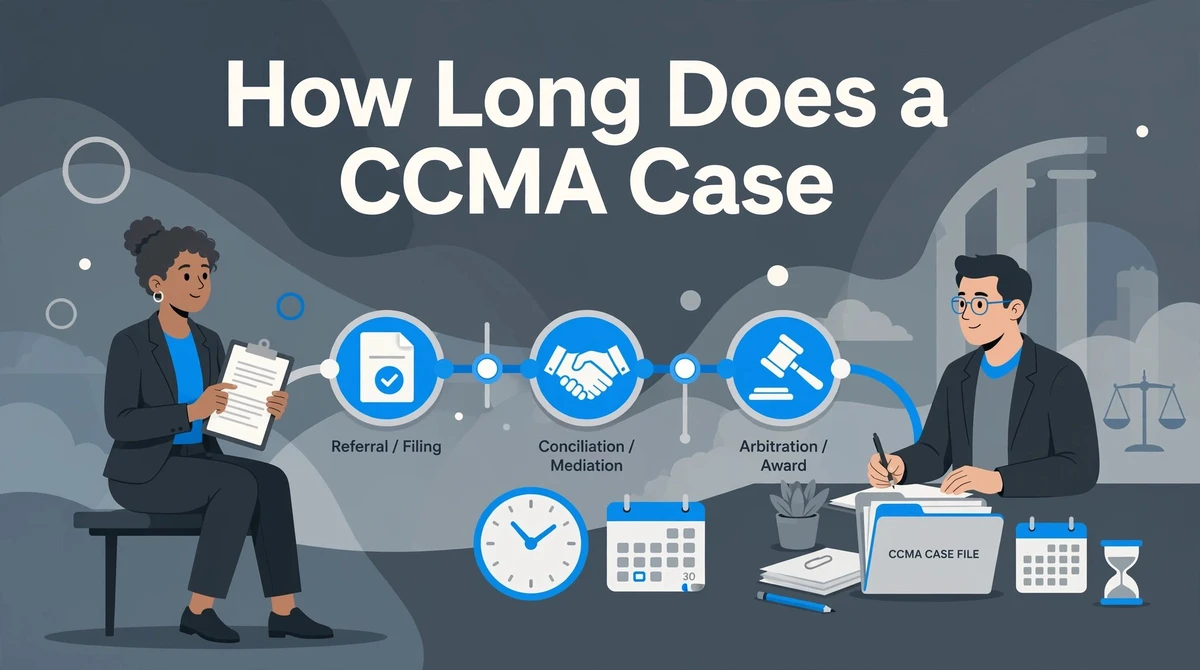
Most CCMA cases end at conciliation, within about six weeks of the referral. The ones that go all the way to an arbitration award take months.
Here is the actual sequence, with every deadline that binds you and every one that binds the CCMA.
The clock that matters most is yours
You have 30 days from the date of dismissal to refer. Weekends and public holidays are counted.
Nothing else on this page matters if you miss that. Check your date with the calculator on our unfair dismissal page.
Late referrals need condonation, which means persuading a commissioner that you had good cause for the delay. The longer you leave it, the harder that gets.
Step by step, with the timing
| Stage | Time |
|---|---|
| Refer the dispute (Form LRA 7.11) | Within 30 days of dismissal |
| CCMA schedules the hearing | Within 30 days of referral |
| Notice of the hearing | At least 14 days before |
| Conciliation | Usually a single day |
| Request arbitration (Form LRA 7.13) | Within 90 days of the certificate |
| Notice of arbitration | At least 21 days before |
| Arbitration hearing | A few hours to several days |
| The award | Within 14 days of the hearing |
| Review to the Labour Court | Within 6 weeks of the award |
What actually happens
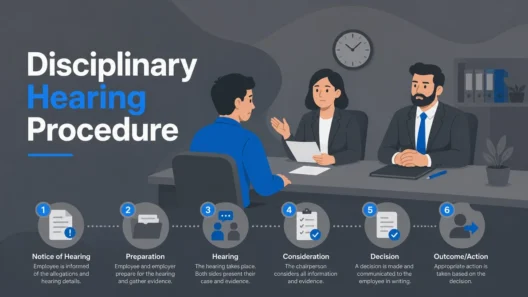
Conciliation, roughly four to six weeks in. An informal, off the record settlement meeting with a commissioner. No evidence, no witnesses, no record. The CCMA settles a large proportion of disputes here, and settling is not losing. If your employer offers a reasonable number, take it seriously, because arbitration is a gamble and it costs you months.
Con-arb is the default. The CCMA sets almost everything down as con-arb, meaning that if conciliation fails, arbitration starts immediately, the same day, before the same commissioner.
That is a very good thing for speed and a very bad thing if you turn up unprepared. Bring your documents and your witnesses to conciliation, because you may be running the whole case that afternoon.
Either party can object to con-arb in writing at least seven days beforehand, which splits the two and adds months.
One exception. If your dismissal relates to probation, you cannot object to con-arb. It is compulsory. See probation period.
Arbitration. A formal hearing. Evidence is led, witnesses testify and are cross examined. Your employer goes first, because the burden of proof is on them. It can run from a few hours to several days.
The award comes within 14 days and it is binding. It can be made an order of the Labour Court and enforced like any judgment.
So how long, realistically?
Settled at conciliation: four to eight weeks from referral.
Resolved at con-arb on the day: six to ten weeks, plus 14 days for the award.
Split arbitration: several months. You add the 90 day window to request arbitration, the queue for a date, 21 days’ notice, and any postponements.
Taken on review to the Labour Court: add a year or more. Reviews are slow.
Where cases actually get stuck
Postponements. Either side can apply. A postponement can add months, and employers with lawyers know it.
A defective referral. Wrong form, wrong party cited, no proof of service. The CCMA may find it has no jurisdiction, and you start again, possibly out of time. Serve properly and keep proof of service.
Objecting to con-arb. It doubles the calendar. Only do it if you genuinely need time to prepare.
Condonation. A late referral means a whole preliminary fight before anyone looks at the merits.
Non attendance. If you fail to attend, your case can be dismissed. If your employer fails to attend, you may get a default award. Turn up.
What you can do to speed it up
- Refer immediately. Do not use all 30 days.
- Prepare for arbitration before conciliation. Assume con-arb will proceed.
- Bring everything to the first hearing. Contract, payslips, dismissal letter, disciplinary minutes, warnings, policies, witnesses.
- Do not object to con-arb unless you truly need to.
- Take settlement seriously. A reasonable settlement today beats an uncertain award in eight months, especially when you have no income.
Remember what is actually on the table. Compensation is capped at 12 months’ remuneration and awards of one to six months are far more common than the cap. Weigh that against the delay before you refuse a settlement.
Claim UIF while you wait
Your CCMA case does not pay your rent. Claim UIF now, in parallel. It is a separate process and it does not prejudice your case. See how to claim UIF, the UI-19 form, and UIF claim rejected if it goes wrong.
Frequently asked questions
How long does a CCMA case take? Most are settled at conciliation within four to eight weeks of referral. A case that runs to arbitration and an award typically takes several months. A review to the Labour Court adds a year or more.
How long do I have to refer a case to the CCMA? Thirty days from the date of dismissal for unfair dismissal, 90 days for an unfair labour practice, and six months for discrimination.
How long after conciliation is arbitration? If it is con-arb, immediately, the same day. If the process was split, you have 90 days to request arbitration and will then wait for a date.
How long does the CCMA take to issue an award? Within 14 days of the arbitration concluding.
Can I appeal a CCMA award? Not appeal, but review. You have six weeks to take it to the Labour Court, and you must show the award was unreasonable, not merely that you disagree with it.
Is the CCMA free? Yes, referring a dispute costs nothing.
Sources
- CCMA, Frequently asked questions
This is general information, not legal advice.