




Before anything else, understand this. You have 30 days from the date of your dismissal to refer the dispute to the CCMA. Weekends count. Public holidays count.
Miss that window and your referral will not be processed unless you apply for condonation and convince a commissioner that you had good cause for the delay. Plenty of strong claims die here, not on the merits, but on the calendar.
Work out your deadline first. Then read the rest.
CCMA Unfair Dismissal Claim Calculator
You have 30 days to refer an unfair dismissal. Check your deadline and what you could be awarded.
Breakdown and how this works
You have 30 days from the date of dismissal to refer an unfair dismissal dispute, using Form LRA 7.11. Weekends and public holidays are counted. If the 30th day falls on a Sunday or a public holiday, it moves to the next day. Miss the deadline and your referral will not be processed unless you apply for condonation and show good cause for the delay.
Reinstatement, not money, is the primary remedy. An arbitrator must order reinstatement or re-employment unless it is not reasonably practicable, the employee does not want it, or the dismissal was unfair only because the employer botched the procedure. If the reason for dismissal was sound and only the process was flawed, you will not get your job back, and compensation is the remedy.
Compensation is capped at 12 months’ remuneration for an ordinary unfair dismissal. A commissioner has no discretion to go beyond it. For an automatically unfair dismissal, for example one based on pregnancy, race or trade union membership, the cap is 24 months, but those disputes are decided by the Labour Court, not the CCMA. The CCMA conciliates them and then they move on.
The cap is a ceiling, not an expectation. Compensation is whatever the commissioner finds just and equitable, and awards of one to six months are far more common than the maximum. You do not have to prove actual financial loss, because compensation is treated as a solatium for the humiliation and injury of an unfair dismissal, not simply as lost income.
What makes a dismissal unfair
Section 188 of the Labour Relations Act requires two things of your employer. Fail either and the dismissal is unfair.
A fair reason. There are only three lawful reasons to dismiss anyone in South Africa:
- Misconduct, meaning you did something wrong
- Incapacity, meaning ill health, injury, or an inability to do the work to the required standard
- Operational requirements, meaning retrenchment. See our guide to the section 189 process
If your dismissal does not fit one of those three, it is unfair, full stop.
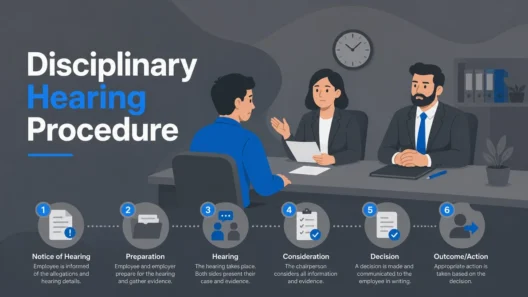
A fair procedure. Even a perfectly good reason does not save a dismissal if the process was a sham. Your employer must investigate, put the allegations to you, give you time to prepare, let you state your case, and let you be assisted. See disciplinary hearing procedure.
Your employer has to prove it, not you
This is the most important thing on this page after the 30 day clock, and most employees do not know it.
The burden of proof is on the employer. At arbitration, your employer must prove, on a balance of probabilities, that the dismissal was both substantively and procedurally fair. You do not have to prove it was unfair.
The criminal standard of "beyond a reasonable doubt" does not apply. It is the civil standard, and the onus sits with them.
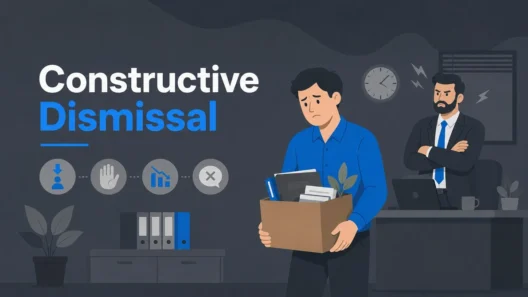
There is one big exception. In a constructive dismissal claim, where you resigned and say you were forced out, the burden flips onto you. That is why those cases are so much harder to win.
Automatically unfair dismissals
Some reasons are so unacceptable the law treats the dismissal as unfair without argument. These include dismissal because of:
- Pregnancy or any reason related to it
- Trade union membership or activity
- Discrimination on grounds like race, gender, religion, sexual orientation or disability
- Taking part in a lawful strike
- Whistleblowing or making a protected disclosure
- A transfer of the business under section 197
These carry a compensation cap of 24 months instead of 12. But note where they go: automatically unfair dismissals are conciliated at the CCMA and then decided by the Labour Court, not arbitrated by a commissioner. That is a longer and more expensive road, so get advice before you frame your claim this way.
What you can actually win
Reinstatement is the primary remedy, not money. Section 193 says an arbitrator must order reinstatement or re-employment if the dismissal was unfair, unless one of a few exceptions applies.
The biggest exception is this: if the dismissal was unfair only because the procedure was flawed, reinstatement is off the table. A sound reason plus a botched process gets you compensation, not your job.
Compensation is capped at 12 months' remuneration for an ordinary unfair dismissal. A commissioner has no discretion to exceed it.
But the cap is a ceiling, not an expectation. Compensation is whatever the commissioner considers just and equitable, and awards of one to six months are far more common than twelve. The Labour Appeal Court has described compensation as a solatium, meaning it is relief for the humiliation and injury of being unfairly dismissed, not simply a payment for lost income. Which is why you do not have to prove actual financial loss to get it.
The CCMA process, step by step
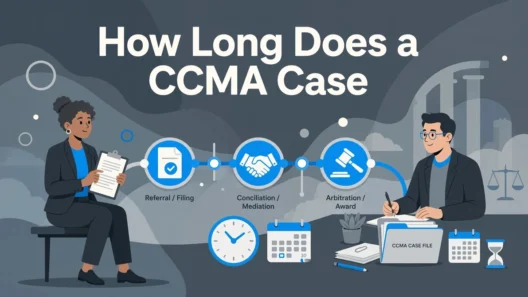
1. Refer the dispute. Form LRA 7.11, within 30 days. Serve it on your employer and keep proof of service. A defective referral can sink the case on jurisdiction alone.
2. Conciliation. The CCMA schedules your case within 30 days of the referral, with at least 14 days' notice. Conciliation is an informal, off the record settlement meeting. A great many cases end here, and settling is not defeat.
3. Con-arb. The CCMA sets almost everything down as con-arb, meaning arbitration begins immediately if conciliation fails, on the same day, before the same commissioner. Either side can object in writing at least 7 days beforehand and have the two split.
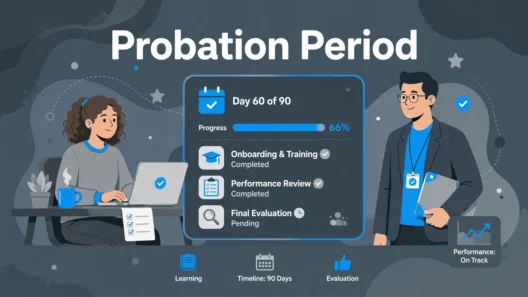
One exception you cannot object to: if your dismissal relates to probation, con-arb is compulsory. Turn up ready to run the whole case in one day. See probation period.
4. Certificate. If conciliation fails, the commissioner issues a certificate of outcome.
5. Arbitration. Request it on Form LRA 7.13 within 90 days of the certificate. This is a formal hearing with evidence and witnesses.
6. The award. Issued within 14 days of the hearing. It is binding.
7. Review. Unhappy with the award? You have 6 weeks to take it on review to the Labour Court. Note that this is a review, not an appeal. You must show the commissioner's decision was unreasonable, not merely that you disagree with it.
How long all this takes in practice is covered in how long does a CCMA case take.
Who can represent you
At conciliation: a fellow employee, or a trade union official or office bearer. Not an attorney. Your employer is in the same boat and may send an HR manager or an employers' organisation representative, but not a lawyer.
At arbitration: legal representation is allowed, except where the dismissal is for misconduct or incapacity, which covers most cases. There, a lawyer only gets in if both parties consent, or if the commissioner allows it because the case is complex, raises legal questions, or the sides are badly mismatched.
This is deliberate. The CCMA is designed so an ordinary worker can bring a case without a lawyer, and the vast majority do.
What to do this week
- Diarise your 30 day deadline. Today.
- Gather your documents. Contract, payslips, the dismissal letter, the disciplinary notice and minutes, warnings, policies, messages, the names of witnesses. Do it before your access to email is cut.
- Write down the timeline while it is fresh. Dates, who said what, who was present.
- Separate the two questions. Was the reason fair? Was the process fair? Argue them separately. A vague "it was all unfair" is far weaker than two specific attacks.
- File Form LRA 7.11 and keep proof of service.
- Claim your UIF in parallel. It is a separate process and being dismissed does not stop you. See how to claim UIF and check your UI-19 form.
Do not resign in the hope it looks better. A resignation forfeits almost everything, as our guide to retrenchment vs resignation explains.
Frequently asked questions
How long do I have to refer an unfair dismissal to the CCMA? Thirty days from the date of dismissal, using Form LRA 7.11. After that you need condonation.
Who has to prove the dismissal was unfair? Your employer must prove it was fair. The exception is constructive dismissal, where the employee bears the burden.
How much compensation can I get for unfair dismissal? Up to 12 months' remuneration, or 24 months for an automatically unfair dismissal. In practice awards of one to six months are more common than the maximum.
Can I get my job back? Yes. Reinstatement is the primary remedy. But if the dismissal was unfair only because of a procedural flaw, reinstatement is not available.
Do I need a lawyer at the CCMA? No, and in misconduct and incapacity arbitrations you generally cannot have one without permission. The CCMA is built for unrepresented parties.
What if I was dismissed while on probation? You can still refer an unfair dismissal dispute, but con-arb is compulsory and cannot be objected to.
Is it worth referring if the reason was fair but the process was bad? Often yes. A procedurally unfair dismissal still attracts compensation, though not reinstatement.
Sources
- CCMA, Frequently asked questions
- CCMA, Unfair labour practice and dispute referral timeframes
This is general information, not legal advice. If your 30 day window is close to expiring, act now and get advice.