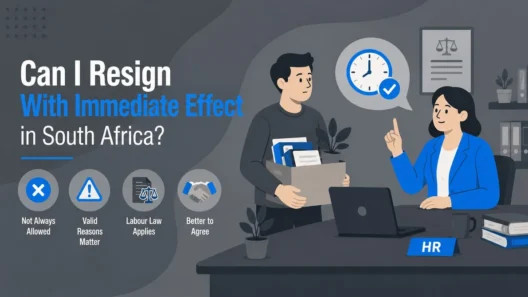




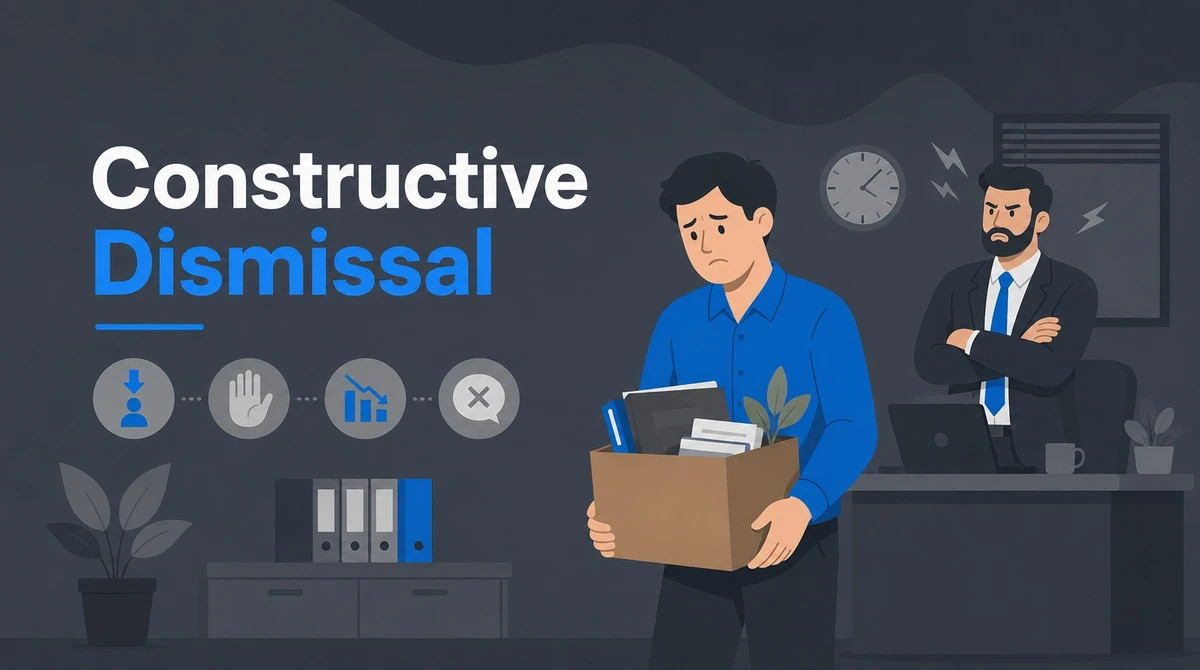
Constructive dismissal is when you resign, but the law treats it as though your employer dismissed you. Section 186(1)(e) of the Labour Relations Act defines it as an employee terminating employment, with or without notice, because the employer made continued employment intolerable.
It is the claim people reach for when work has become unbearable. It is also the claim they lose most often, and usually for reasons that had nothing to do with how badly they were treated.
Read this before you resign, not after.
The burden of proof is on you
Start here, because everything else follows from it.
In an ordinary unfair dismissal case, your employer must prove the dismissal was fair. In a constructive dismissal case, you must prove you were constructively dismissed. The onus flips.
That is the single reason these cases are so hard. You are no longer the person answering the charge. You are the person bringing it, and you must build it.
The four things you must prove
1. You resigned. There must be an actual termination by you. This is usually the easy part, though a resignation you later withdrew, or one your employer never accepted, complicates things.
2. Continued employment was objectively intolerable. Not merely unpleasant. Not merely unfair. Intolerable, judged by an objective standard, not by how you felt. A commissioner asks whether a reasonable person in your position could have carried on.
3. Your employer caused it. The intolerable situation must be the employer’s doing, whether by act or by omission. An employer who knew about sustained harassment and did nothing has caused it by omission.
4. You had no reasonable alternative. Resignation must have been a last resort. This is where most claims die, and we will come back to it.
Fail any one of the four and the claim fails, no matter how well you prove the other three.
Why most claims fail: you did not exhaust the alternatives
Commissioners ask one question above all others. Did you try to fix it first?
If you resigned without lodging a formal grievance, without escalating to HR, without giving your employer a chance to address it, your employer will say, with some force, that you never gave them the opportunity. And they will usually win.
So before you resign:
- Lodge a formal written grievance. Follow your employer’s grievance procedure exactly.
- Escalate it if nothing happens.
- Put everything in writing. Emails, not corridor conversations.
- Keep copies at home, not on a work laptop you will surrender on your last day.
- Give them a reasonable chance to respond. Not one day.
A documented, ignored grievance is the single strongest piece of evidence in a constructive dismissal case. Its absence is usually fatal.
What has counted as intolerable
The bar is high, but real. Situations that have supported claims include sustained bullying or harassment that the employer failed to stop, sexual harassment, a unilateral and significant reduction in pay or demotion, being stripped of duties and left with nothing to do, threats and intimidation, and being pressured to act unlawfully.
What has not
A difficult or unpleasant manager. Rudeness, coldness and poor management are not intolerable in the legal sense.
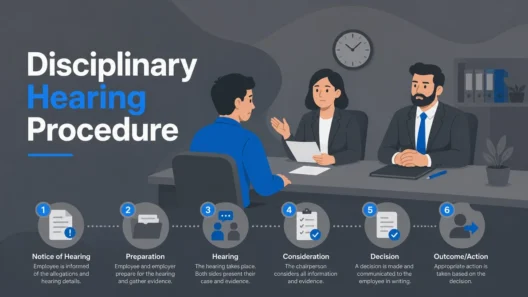
Being disciplined. Facing a disciplinary hearing, even one you think is unfair, is not constructive dismissal. Your remedy is to defend it and then challenge the outcome. See disciplinary hearing procedure.
Being passed over for promotion or a bonus. That may be an unfair labour practice, which is a different claim with a different route.
A restructure that made your job less enjoyable.
Wanting to leave. Constructive dismissal is not a mechanism for converting a resignation you already wanted into a payout.
The trap: you have already left
Here is the part people do not think through.
The moment you resign, you have no salary. If the claim then takes months and you lose, you have nothing. You have also forfeited the things you would have kept had you stayed and been dismissed:
- No severance pay, because there was no retrenchment. See severance pay
- Probably no UIF, because your employer will record a resignation on the UI-19. See UIF claim rejected
- No notice pay
Compare retrenchment vs resignation before you decide. If a retrenchment is coming anyway, resigning to claim constructive dismissal can be the worst financial decision available to you.
If you win
The remedies are the same as any unfair dismissal: reinstatement, re-employment, or compensation capped at 12 months’ remuneration.
Reinstatement is theoretically available but rarely appropriate here, for obvious reasons. You said the place was intolerable. Compensation is the realistic outcome, and awards of a few months are far more common than the cap.
The 30 day clock still runs
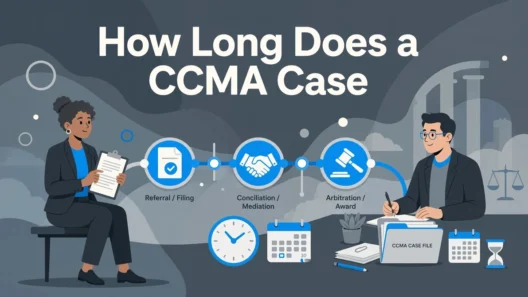
A constructive dismissal is a dismissal, and the ordinary time limit applies. You have 30 days from the date you resigned to refer the dispute to the CCMA on Form LRA 7.11.
That is a short window when you are also job hunting and recovering. Diarise it the day you resign. Use the calculator on our unfair dismissal page to check it.
Before you resign, do these five things
- Lodge a formal written grievance, and give your employer a genuine chance to fix it.
- Document everything, dated, and keep it at home.
- See a doctor if it is affecting your health, and keep the records. Medical evidence of the impact is powerful.
- Get advice from a union or a labour lawyer before you resign, not after.
- Do the arithmetic. Can you survive several months without pay, with no UIF, if the claim goes badly?
Constructive dismissal is a real remedy for genuinely intolerable treatment. It is not an exit strategy. The people who win are the ones who tried everything else first and can prove it.
Frequently asked questions
What is constructive dismissal in South Africa? Where you resign because your employer made continued employment intolerable. Section 186(1)(e) of the LRA treats it as a dismissal by the employer.
Who has to prove constructive dismissal? You do. Unlike an ordinary unfair dismissal, the burden of proof is on the employee, which is why these claims are so difficult.
Do I have to resign to claim constructive dismissal? Yes. There must be an actual resignation. But resign only as a last resort, after exhausting grievance procedures.
Is a bad manager constructive dismissal? No. The test is objective intolerability, not unpleasantness. Rudeness and poor management do not meet it.
Can I claim UIF after constructive dismissal? Your employer will normally record a resignation on the UI-19, which is likely to block a claim unless and until the CCMA finds in your favour.
How long do I have to refer a constructive dismissal? Thirty days from the date you resigned, on Form LRA 7.11.
How much can I get for constructive dismissal? Up to 12 months’ remuneration, though awards of a few months are far more common.
Sources
- CCMA, Frequently asked questions
This is general information, not legal advice. Constructive dismissal is a high risk claim with the burden of proof on you. Get advice before you resign.