



You get flagged at a roadblock, the officer looks at your card, and you realise it expired weeks ago. Before you panic, know this: an expired card does not automatically mean a fine. Whether you are covered or exposed comes down to one thing, which is whether you started your renewal before or after the card expired.
This guide sets out the actual rules for an expired driver’s licence in 2026, the grace period that protects you, when you need a temporary licence, what the fine really is, and how long a card can stay expired before you lose your driving entitlement altogether.
First, clear up the confusion: card versus disc
Most pages online mix up two completely different documents, and it costs drivers money.
Your driver’s licence card proves that you are allowed to drive. It is valid for five years. Your vehicle licence disc, the paper disc on your windscreen, proves that the car itself is licensed for the road, and it is renewed every year. They have different expiry dates, different rules, and different penalties.
The 21-day grace period and the ten percent per month penalty that you see quoted everywhere belong to the vehicle disc, not your driving card. Do not apply those numbers to your driver’s licence. The rest of this page is about the driver’s licence card only.
The one question that decides everything
When your driver’s licence card expires, your legal position depends entirely on timing.
If you applied for renewal before the card expired, you are covered by a three-month grace period. Your expired card is treated as valid for those three months while the new card is printed, on one condition: you must carry the expired card together with your renewal receipt as proof that you applied in time. This concession was confirmed by the Department of Transport in a notice gazetted on 26 September 2025, and it exists mainly because of the long-running card printing backlog.
If the card had already expired before you applied, that three-month grace period does not apply to you. To drive legally while you wait, you must obtain a Temporary Driving Licence and keep it in the vehicle.
That distinction is the whole game. Renew early and you are protected automatically. Let it lapse first and you have to take an extra step.
The Temporary Driving Licence (TDL)
A Temporary Driving Licence is your bridge. It is valid for six months, which is meant to cover the printing wait, and you can renew it once if the new card still has not arrived.
The TDL is inexpensive, usually around R150, though the exact amount is set at provincial level, so confirm the figure at your Driving Licence Testing Centre. In most renewal applications it is issued as part of the process rather than as a separate errand. Carry the TDL and a copy of your renewal receipt at all times, because traffic officers know the TDL but occasionally ask to see the supporting receipt as well.
What the fine actually is
Driving on an expired card without cover is an offence, but the penalty depends on where you are stopped, because two enforcement systems run in parallel.
In most of the country, the matter is handled under the Criminal Procedures Act as an admission-of-guilt fine. The amount varies by province and by the officer’s discretion, and typically falls in the range of R500 to R1,250.
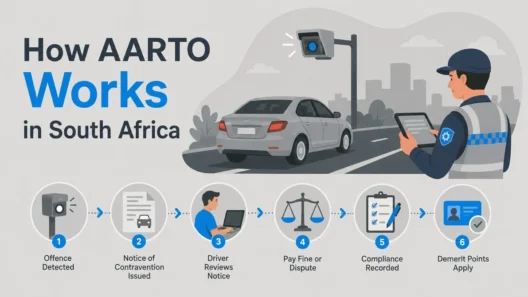
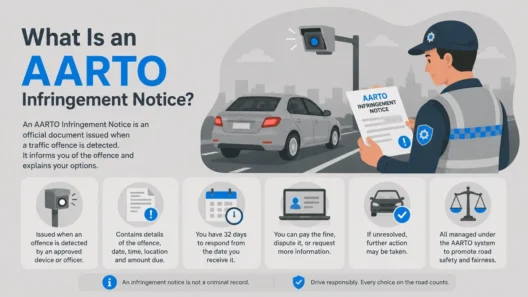
In municipalities where the AARTO system applies, driving with an expired card carries a set penalty of R2,000 plus three demerit points on your record. AARTO began in Tshwane and Johannesburg and is being phased in across more municipalities, so check whether your metro is covered. If you want to see how three points affects your standing, and how close that puts you to a suspension, work it through on the AARTO demerit points simulator.
You will not be arrested for an expired card on its own. The real risk, beyond the fine, is that in some metros the vehicle can be impounded, which turns a small administrative slip into a costly, time-consuming mess.
How long can a card stay expired before you lose your licence?
This is the part that catches people who have been putting it off for years.
Expired for less than five years: you simply renew as normal. There is no re-test and no re-application. The Driving Licence Testing Centre issues a new card under the same licence number, and the only test repeated is the on-site eye test. See the full walk-through in how to renew your driver’s licence.
Expired for more than five years: the renewal lapses and your driving entitlement falls away. You have to reapply from scratch, which means passing the K53 learner’s test again, then the practical driving test, and then completing a fresh application. Until you do, you may only drive on a learner’s permit with a qualified supervising driver beside you.
The lesson is simple: the longer you wait, the more you risk, and past the five-year mark you risk starting over completely.
A note on insurance
An expired card is not only a traffic matter. Many car insurance policies require the driver to hold a valid licence, and some may query or reduce a claim if your card had lapsed at the time of an accident. The law and your policy are two separate things. If your card is expired, read your policy wording and speak to your insurer so you are not caught out on a claim.
What to do right now
If your card is still valid, renew from up to four weeks before the expiry date printed on it. You pay no early-renewal penalty for doing so, and booking six to eight weeks ahead is sensible given the backlog at testing centres.
If your card has already expired, apply as soon as possible, obtain your Temporary Driving Licence, and carry it with your renewal receipt every time you drive. Clear any outstanding traffic or AARTO matters first, because an unresolved enforcement order can block your renewal on the system before you even reach the counter.
You will also need to pass the eye test at renewal, so if you wear glasses or contacts, bring them. The full requirement is covered in the driver’s licence eye test guide, and if you are unsure what your card entitles you to drive, check the driving licence codes breakdown.
Methodology note
The rules on this page reflect the National Road Traffic Act, the Department of Transport notice gazetted on 26 September 2025 on the validity of expired cards, and the enforcement framework under the Criminal Procedures Act and the AARTO Act. Fine amounts under the Criminal Procedures Act are set provincially and applied at an officer’s discretion, so the figures given are typical ranges rather than fixed national amounts. Temporary Driving Licence fees are set at provincial level and change over time. Grace-period concessions have been revised repeatedly in response to the card printing backlog. Always confirm current figures and any active concession with your Driving Licence Testing Centre or the registering authority before you rely on them.