



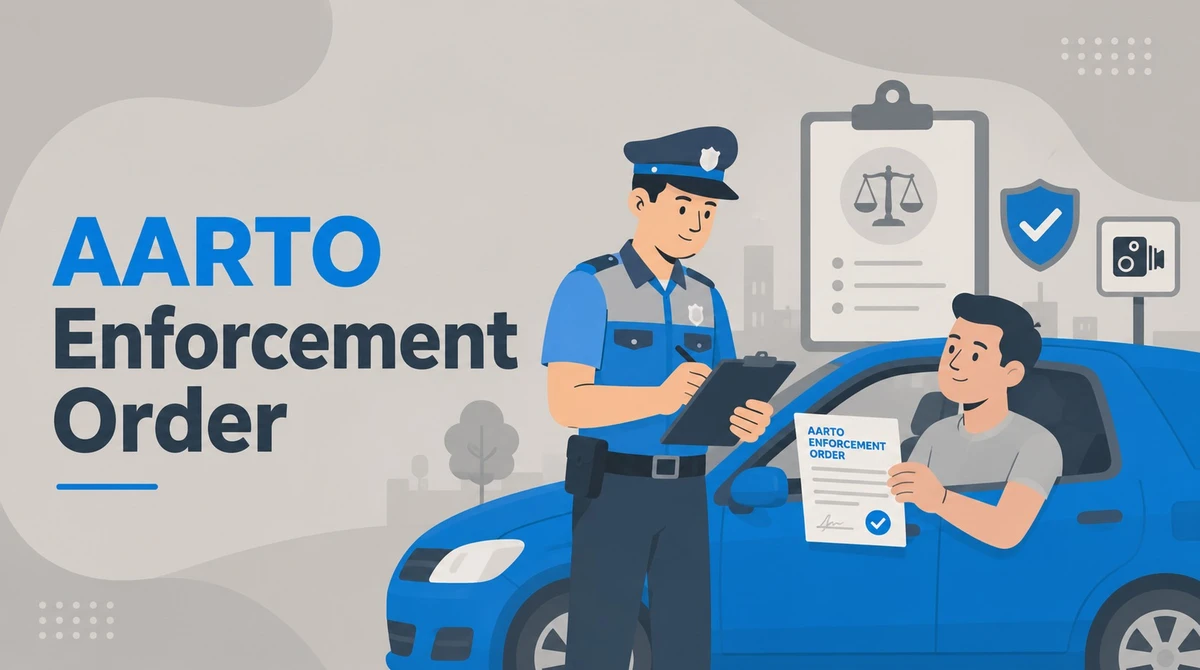
An AARTO enforcement order is the third and most serious stage of the traffic fine process under the Administrative Adjudication of Road Traffic Offences (AARTO) Act. It is issued when you ignore an AARTO courtesy letter for 32 days, and it is the point where an unpaid fine stops being a piece of paper and starts blocking your life: you cannot renew your driving licence or your vehicle disc until it is cleared.
The good news is that you can apply to have it revoked, but only inside a strict 32-day window. This page explains what an enforcement order does, your rights when one is issued, and the four steps to get it lifted.
What an AARTO enforcement order does
If you do not act within 32 days of the actual or presumed service of the courtesy letter, the Road Traffic Infringement Agency (RTIA) must issue an enforcement order. It has three effects, and together they are what make AARTO enforceable:
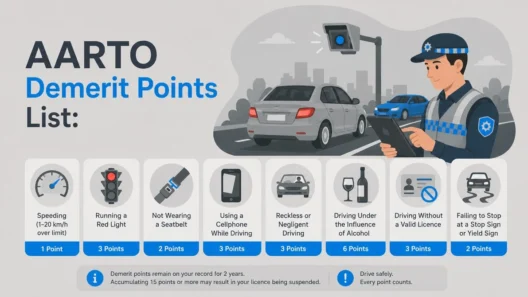
- It allocates your demerit points. The points for the offence are applied to your driving licence, operator card or vehicle licence disc. You can see how many each offence carries on the AARTO demerit points list, or estimate where you stand with our AARTO demerit points simulator.
- It blocks your licences on eNaTIS. The order electronically blocks licensing transactions on the national traffic register, which means no driving licence, professional driving permit or vehicle licence disc can be issued to you until the order is cleared.
- It adds another R100. On top of the penalty, the IPL and the courtesy letter fee, the enforcement order adds a further R100.
By this stage the fine can only be settled by paying 100% of the penalty, plus R100 for the Infringement Penalty Levy, R100 for the courtesy letter and R100 for the enforcement order. That is R300 over and above the original fine amount, with no discount available.
The eNaTIS block, and the right most people do not know
The block is the part that catches people out. You go to renew your driver’s licence or your vehicle disc, and you are told you cannot until you pay outstanding fines.
Here is the point most guides leave out: only an actual enforcement order can block your renewal. An outstanding infringement notice that has not been converted into an enforcement order cannot lawfully stop you renewing a licence. If a licensing office refuses your renewal, you are entitled to ask whether the block is an enforcement order or merely an unpaid infringement notice, and to stand your ground if it is the latter.
You also cannot be arrested simply for an outstanding infringement. Arrest requires a warrant, which must be produced to you.
How to revoke an AARTO enforcement order
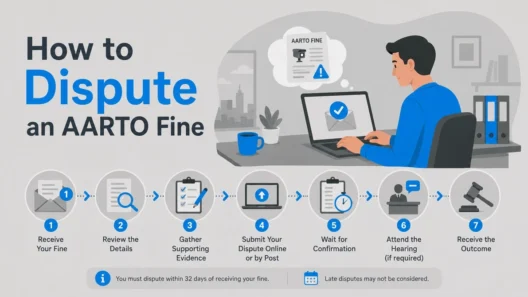
You may apply to the RTIA to have an enforcement order revoked, but only within 32 days of the actual or presumed service of the order. Miss that window and revocation is no longer available, so act quickly. Four steps:
- Check that you actually have one. Log in to the official AARTO portal and confirm whether the block against your name is an enforcement order, and the date it was served. That date starts your 32-day clock.
- Confirm you are inside the 32 days. Revocation is only possible within 32 days of service. If you are outside it, your route shifts to paying or seeking legal advice instead.
- Apply to the RTIA in the prescribed manner. Submit the application with satisfactory reasons why the order should be revoked. Common grounds are that the notice was never properly served, that you were not the driver, that you already paid, or that the correct AARTO process was not followed.
- Keep your proof. Save every submission receipt and confirmation. If the process was not followed correctly, that evidence is what supports your application, and it protects you if the system escalates the matter in error.
What happens if you ignore the enforcement order
If you do nothing about an enforcement order, the RTIA registrar may issue a warrant of execution. Alongside that, the eNaTIS block simply stays in place, so your licence and disc renewals remain frozen until the order is paid or revoked. There is no version of ignoring an enforcement order that makes it go away.
Where it sits in the timeline
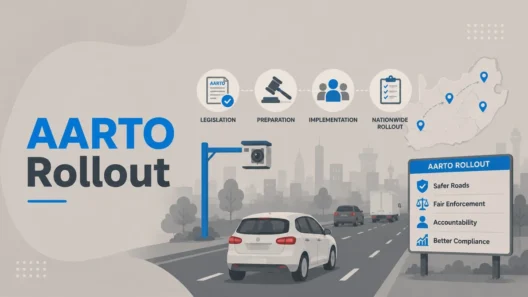
For a camera offence, the enforcement order is the end of the road. Counting from the day of the offence, the infringement notice is issued within 40 days and deemed served around day 50, the courtesy letter follows around day 114, and the enforcement order around day 146. From offence to enforcement order runs roughly six months, which is also six months in which acting earlier would have cost you far less.
Frequently asked questions
What is an AARTO enforcement order? It is the third stage of the AARTO process, issued by the RTIA when a courtesy letter is ignored for 32 days. It allocates your demerit points, adds a R100 fee, and electronically blocks your licence and vehicle disc renewals on eNaTIS until it is cleared.
How do I get an AARTO enforcement order revoked? You apply to the RTIA in the prescribed manner, with satisfactory reasons, within 32 days of the order being served. Grounds include improper service, not being the driver, or the correct process not being followed.
Can an enforcement order really block my licence renewal? Yes. An enforcement order blocks licensing transactions on eNaTIS, so no driving licence, professional driving permit or vehicle disc can be issued until it is cleared. An ordinary unpaid infringement notice, however, cannot lawfully block a renewal.
How much does an enforcement order add? It adds R100, on top of the R100 courtesy letter fee and the R100 Infringement Penalty Levy. With no discount available, that is R300 over and above the original penalty.
Can I be arrested over an AARTO enforcement order? Not for the fine itself. Arrest requires a warrant, which must be produced to you. The practical consequence of an enforcement order is the eNaTIS block on your renewals, not arrest.