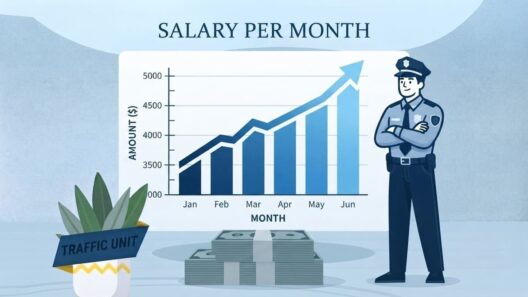





Student nurses on a public sector developmental programme are paid a stipend set nationally by the DPSA. From 1 April 2026, the six stipend schedules run from R4 965.00 a month at the bottom of Schedule A1 to R14 189.50 a month at the top of Schedule C2. Which schedule you fall on is decided by your provincial health department, not by the DPSA.
The figures below come from the Developmental Programmes Stipends annexure to DPSA Circular No. 15 of 2026, on PERSAL key scale 283. Almost nothing else published on this topic is sourced at all.
Quick facts
| Item | Detail |
|---|---|
| Source | DPSA Circular No. 15 of 2026, Developmental Programmes Stipends annexure |
| PERSAL key scale | 283 |
| Effective date | 1 April 2026 |
| Lowest schedule (A1 and A2) | R4 965.00 to R5 848.50 a month |
| Highest schedule (C2) | R12 045.75 to R14 189.50 a month |
| Nature of payment | Non-pensionable allowance, not a salary |
| Who assigns your schedule | Your provincial department of health |
| Community service year | R23 343.25 a month, and it is a salary, not a stipend |
| 2026 adjustment | In line with the 4.0% public service cost of living adjustment |
The 2026 stipend schedules
These are the full-time, non-pensionable allowance bands with effect from 1 April 2026.
| Schedule | Monthly (2026) | Annual (2026) |
|---|---|---|
| A1 and A2 | R4 965.00 to R5 848.50 | R59 580 to R70 182 |
| A3 | R5 865.25 to R6 909.00 | R70 383 to R82 908 |
| B1 | R6 925.75 to R8 158.25 | R83 109 to R97 899 |
| B2, B3 and B4 | R8 174.75 to R9 629.75 | R98 097 to R115 557 |
| C1 | R9 861.50 to R11 616.50 | R118 338 to R139 398 |
| C2 | R12 045.75 to R14 189.50 | R144 549 to R170 274 |
Each schedule has 12 notches, and within a schedule you move up as you progress through your programme.
An honest note on which schedule applies to you
The DPSA sets the stipend schedules for the whole public service. It does not publish a table saying “student nurses sit on Schedule B1”. The developmental programmes annexure covers interns, learners and trainees across every occupation, and the schedule is assigned by the employing department.
For nursing students, that means your provincial department of health decides. In practice the schedule tends to track the level of the programme and the year of study, so a first-year student on a higher certificate is typically placed low on the range while a final-year student on a degree programme sits higher. But the placement is a provincial decision and it varies.
If you want your exact figure, ask your nursing college or your provincial health department’s human resources office to confirm which stipend schedule and notch you are on. Anyone publishing a single national “student nurse stipend” number without naming the schedule is guessing.
Your stipend is not a salary
This matters more than it sounds.
The stipend is a non-pensionable allowance. You do not accrue GEPF pension service on it. You are on a developmental programme, not in a permanent post, and the money is structured to reflect that.
The circular does require that stipends be adjusted and linked to the approved salary scales with effect from 1 April 2026, which is why they moved with the 4.0% public service adjustment rather than being frozen. But linked is not the same as equal, and a stipend does not build a pension.
What happens after you qualify
This is the part worth planning around, because the jump is large.
Community service year. Once you register with the South African Nursing Council as a professional nurse, you complete a year of community service, paid at R23 343.25 a month. Note that this is a full OSD salary notch of R280 119 a year. It is not a stipend, and you will see it wrongly described as one all over the internet. It carries the ordinary public service benefits, including GEPF membership.
Professional nurse, Grade 1. The year after community service, you move onto the professional nurse scale at R28 113.25 a month.
So the arc runs roughly from a stipend somewhere in the R5 000 to R14 000 range while you train, to R23 343.25 during community service, to R28 113.25 as a professional nurse. If you qualify as an enrolled nurse rather than a professional nurse, you start at R19 120.00 a month.
If you train as an enrolled nurse or auxiliary
The stipend schedules apply to public sector developmental programmes across the nursing qualifications, but the destination differs.
Enrolled nursing auxiliary. You qualify as a nursing assistant and start at R15 102.50 a month.
Enrolled nurse. You qualify as a staff nurse and start at R19 120.00 a month.
Professional nurse. Community service at R23 343.25 a month, then R28 113.25 a month.
That difference compounds. A professional nurse tops out at R52 924.00 a month in general nursing, and R41 285.25 a month is the entry point once you hold a post-basic specialty qualification. An enrolled nurse tops out at R33 116.00 a month after twenty years.
Bursaries and funding
The stipend is not the only money in play. Provincial health departments run nursing bursaries, and NSFAS funds nursing qualifications at public institutions. Whether you receive a stipend, a bursary, or both depends on how your programme is structured and which province you train in, since some provinces employ student nurses on developmental programmes while others fund them through bursaries without an employment relationship.
Check with your college which model applies to you before you budget, because the two are not equivalent and only one of them pays monthly.
Related tools and reading
- Nurse salary in South Africa: full OSD pay scales
- Professional nurse salary: full grade breakdown
- Enrolled nurse and staff nurse salary
- Take-home pay calculator
Frequently asked questions
How much is the student nurse stipend in South Africa? The DPSA developmental programme schedules run from R4 965.00 to R14 189.50 a month from 1 April 2026. Your provincial health department decides which schedule you are placed on.
Is the student nurse stipend the same in every province? The schedules are national, but the assignment is provincial. Two students on the same qualification in different provinces can be placed on different schedules.
Does a student nurse stipend count towards my pension? No. It is a non-pensionable allowance. You begin accruing GEPF service once you are appointed to a post, not while you are on a developmental programme.
What does a community service nurse earn? R23 343.25 a month. It is a full OSD salary notch of R280 119 a year, not a stipend, and it carries normal public service benefits.
What do I earn straight after qualifying as a professional nurse? R23 343.25 a month during your community service year, then R28 113.25 a month as a Professional Nurse Grade 1.
Did student nurse stipends increase in 2026? Yes. The circular required stipends to be adjusted and linked to the approved salary scales with effect from 1 April 2026, in line with the 4.0% public service adjustment.
How do I find out my exact stipend? Ask your nursing college or your provincial department of health’s human resources office to confirm your stipend schedule and notch on PERSAL key scale 283.
Methodology and sources
The stipend bands come from the Developmental Programmes Stipends annexure to DPSA Circular No. 15 of 2026, PERSAL key scale 283, effective 1 April 2026. The circular requires departments to ensure stipends are adjusted and linked to the approved salary scales from that date.
Post-qualification salary figures come from Annexure B to the same circular, the translation key for PERSAL Tables 298 and 299, covering the OSD for Professional Nurses, Staff Nurses and Nursing Assistants.
The DPSA does not map occupations to stipend schedules in the annexure. The statement that provincial health departments make that assignment reflects how the developmental programmes framework operates, and readers are directed to confirm their own placement rather than relying on a national figure.
Annual figures are the published full-time allowances. Monthly figures are the annual figure divided by 12. This page was last reviewed on 12 July 2026.
Disclaimer
Stipend placement is decided by your provincial department of health and varies between provinces and programmes. The bands on this page are the national schedules, not a promise of what you personally will be paid. Confirm your schedule and notch with your nursing college or provincial human resources office before making financial commitments.