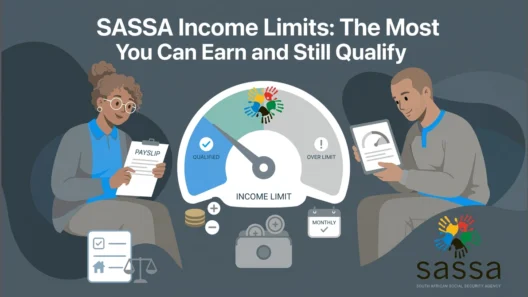




Use the SASSA means test calculator below to check whether your income and assets fall under the limits that took effect on 1 April 2026. If you are single and applying for the Older Persons Grant, you may not earn more than R9 350 a month or hold more than R1 584 000 in assets. Married applicants are assessed together with their spouse.
| Quick facts | |
|---|---|
| What it is | A financial check on your income and assets |
| Who runs it | The South African Social Security Agency (SASSA) |
| Effective date | 1 April 2026 to 31 March 2027 |
| Income limit (single, old age) | R9 350 per month |
| Asset limit (single, old age) | R1 584 000 |
| Grants exempt | Foster Child Grant only |
| Next expected review | 1 October 2026 |
Most SASSA applications are not declined over paperwork. They are declined on the means test, and it happens before anyone looks at your medical report. The limits changed on 1 April 2026, and a great deal of the advice still circulating online uses the old figures.
SASSA Means Test Calculator
Thresholds and grant values are those effective 1 April 2026. A further adjustment is expected on 1 October 2026. This tool is a guide only. SASSA makes the final assessment, and grants for older persons, disability and war veterans are paid on a sliding scale, so an approved payment may be lower than the maximum shown.
Choose your grant, set your marital status, then enter your monthly income and the value of your assets.
What the SASSA means test is
The means test is a financial assessment. SASSA weighs up two things: your income, meaning everything you receive each month rather than only a salary, and your assets, meaning the value of what you own excluding the home you live in.
Pass both and you qualify. Go over on either one and the application is declined.
If you are married, SASSA assesses you and your spouse together. This catches out more people than anything else in the process. Someone who earns nothing at all can still be declined because their spouse earns too much. It makes no difference whether you are married in community of property or out of community of property. The incomes are combined either way.
SASSA means test income threshold for 2026
These figures took effect on 1 April 2026.
Older Persons Grant, Disability Grant and War Veterans Grant
| Income per month | Income per year | Assets | |
|---|---|---|---|
| Single | R9 350 | R112 200 | R1 584 000 |
| Married (combined) | R18 700 | R224 400 | R3 168 000 |
Child Support Grant
| Income per month | Income per year | Assets | |
|---|---|---|---|
| Single | R5 800 | R69 600 | No asset test |
| Married (combined) | R11 600 | R139 200 | No asset test |
The Child Support Grant threshold is not an arbitrary number. It is set at ten times the value of the grant for a single caregiver and twenty times for a married couple, so it moves automatically whenever the grant itself moves.
The Care Dependency Grant is means tested against a separate and considerably higher income threshold. Confirm the current figure at a SASSA office before applying, because several widely repeated versions of it online are out of date.
SASSA grant qualifying income: what counts
More than most applicants expect. SASSA counts money arriving from any source:
- Salary or wages, whether formal, informal, part time or casual
- A pension from a former employer, or a retirement annuity
- Rental income from property you own
- Interest and dividends from savings, fixed deposits or investments
- Payments from a trust
- Maintenance you receive
- Compensation from the UIF, the Road Accident Fund, or the Compensation for Occupational Injuries and Diseases Fund
Two exclusions work in your favour. A social grant your spouse already receives is not counted as income against your application. A once off gift or a single insurance payout is generally not treated as regular income either.
You may deduct pension fund and retirement annuity contributions, along with medical scheme contributions, before your income is assessed. If you are working out what you actually take home each month rather than what you earn on paper, our take-home pay calculator will do the arithmetic, and the SARS tax brackets page explains where those deductions come from. For what different jobs pay across the country, see salaries in South Africa.
One warning worth taking seriously. SASSA asks for three months of bank statements and reads them properly. If your statements show deposits you did not declare, the application can be declined, or an existing grant suspended and the money reclaimed with interest.
SASSA asset threshold: what counts
- Property or land you own other than the home you live in. A second house, vacant land or commercial property all count.
- Savings, fixed deposits, unit trusts, shares and other investments.
The home you actually live in is excluded. Property carrying an outstanding bond is treated as having no value.
The sliding scale, and why your payment may be smaller
This is the part almost nobody explains properly.
The Older Persons, Disability and War Veterans grants are paid on a sliding scale. Passing the means test does not hand you the full amount. The more private income you have, the less SASSA contributes. An applicant with no other income receives the maximum. An applicant earning R8 000 a month passes the test but receives well below R2 400.
Treat the figure in the calculator as a ceiling rather than a promise. The Child Support Grant works differently and pays a flat R580 per child, wherever you sit under the threshold.
SASSA grant amounts from 1 April 2026
| Grant | Monthly amount |
|---|---|
| Older Persons (60 to 74) | R2 400 |
| Older Persons (75 and older) | R2 420 |
| Disability | R2 400 |
| Care Dependency | R2 400 |
| War Veterans | R2 420 |
| Foster Child | R1 290 |
| Child Support | R580 |
| Grant in Aid | R580 |
| SRD | R370 |
A further adjustment is expected on 1 October 2026. The Foster Child Grant has already been confirmed to rise to R1 300 at that point.
Note that a number of websites currently list the Disability Grant at R2 420. That is incorrect. R2 420 is the War Veterans figure. The Disability Grant pays R2 400.
The grants that skip the means test
The Foster Child Grant has no means test at all. It is awarded on the strength of a court order placing the child in your care. Your income and assets are irrelevant to it.
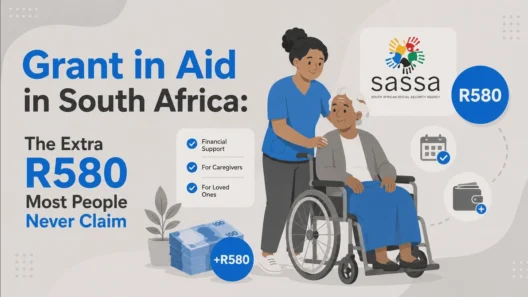
The Grant in Aid has no means test of its own. It is an additional R580 paid on top of an Older Persons, Disability or War Veterans grant when a medical officer confirms you need full time care from another person. You have already passed a means test to hold the underlying grant, so SASSA does not run a second one.
The SRD grant uses a different check entirely. It applies a flat monthly income screen of R624 with no asset test, verified against SARS, UIF, NSFAS and bank records. This is why the SRD does not appear in the calculator above. It is a different mechanism, not a stricter version of the same one.
If you do not pass the means test
You may reapply if your circumstances change materially. If you believe SASSA has assessed you incorrectly, you have 90 days from the date of notification to appeal to the Minister of Social Development.
If you are unemployed and were previously working, the means test may be the wrong door altogether. Unemployment benefits are paid through the UIF, which is run by the Department of Employment and Labour rather than SASSA, and it is contributory. What you receive depends on what you and your employer paid in, not on a means test. Work out what you are owed with our UIF calculator, then follow the steps in how to claim UIF. If a claim has already been turned down, UIF claim rejected sets out every reason and how to appeal.
If you already receive a SASSA grant, you may also qualify for free basic electricity through your municipality’s indigent register, which is worth 50 free units a month.
How we worked this out
Grant values and thresholds on this page are drawn from the 2026 Budget Review released by National Treasury, statements published by Parliament and the Department of Social Development, the SASSA means test explainer issued in April 2026, and the grant pages published on gov.za. Where sources disagreed, government publications were preferred over secondary reporting. The Care Dependency Grant income threshold has been left out deliberately, because no current and clearly dated 2026 figure could be verified.
Frequently asked questions
Does my spouse’s income really count if I earn nothing? Yes. For married applicants both incomes and both sets of assets are combined, regardless of the marriage regime. It is the most common reason a means test is failed by somebody who expected to pass.
Does the grant my spouse already receives count against me? No. An existing SASSA grant held by your spouse is not treated as income in your application.
Does the house I live in count as an asset? No. Only property you own beyond your primary residence is counted, and a bonded property is treated as having no value.
Do the limits change? Yes, usually on 1 April and sometimes again on 1 October, following the Budget. The figures here took effect on 1 April 2026.
Is applying free? Yes. Applying, requesting a reconsideration and appealing are all free through official SASSA channels. Nobody should be charging you to apply or offering to speed your grant along.
Can I receive more than one grant? Only one main grant for yourself at a time. The exception is the Grant in Aid, which is paid on top of an Older Persons, Disability or War Veterans grant.
This page is a guide, not a decision. SASSA makes the final assessment on every application. Grant values and means test thresholds reflect the figures effective 1 April 2026 and are expected to be adjusted again on 1 October 2026.