


If you are reading about parental leave in South Africa and the page tells you that mothers get four months and fathers get ten days, close it. That has not been the law since 3 October 2025.
Most South African websites have not caught up. Employer policies mostly have not caught up either. And there is a hole in the middle of the new system that will cost you real money if you walk into it unprepared.
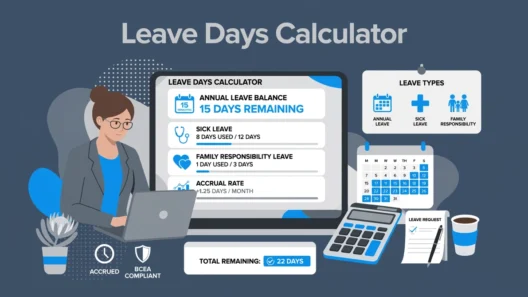
Use the calculator to see what you are entitled to and what UIF will actually pay you.
Parental Leave and UIF Gap Calculator
Post Van Wyk rules. See what leave you can take, what UIF will actually pay you, and what you will be short.
Enter your figures to see your estimate.
Breakdown and how this works
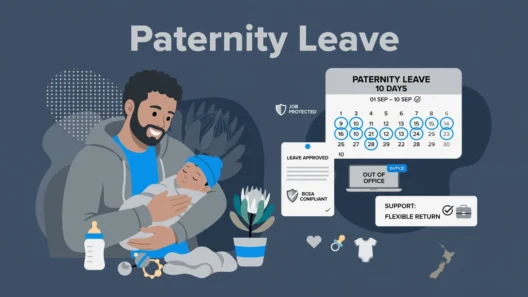
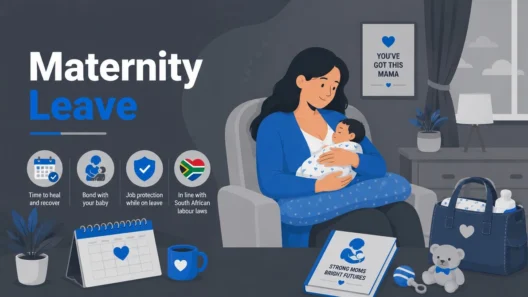
On 3 October 2025 the Constitutional Court ruled in Van Wyk that the old maternity and paternity leave rules were unconstitutional. Those changes took effect immediately. There is no longer a separate maternity leave or a standalone 10 day paternity leave. A single parent, or the only employed parent, gets four consecutive months. Where both parents are employed, they share a pool of four months and 10 days and split it as they choose.
Four months is a period of consecutive calendar months, so the exact number of days depends on when your leave starts. This calculator treats it as roughly 122 days for estimating purposes.
The catch is the money. The Court fixed the leave rules but expressly left the Unemployment Insurance Act to Parliament, so UIF still pays under the old categories. A birth mother can claim the maternity benefit for up to 121 days. Every other parent can still claim only 10 days. Statutory parental leave is unpaid, so the rest of your time off is at your employer’s discretion or out of your own pocket.
UIF pays 66 percent of your earnings, but only on earnings up to the ceiling of R17 712 a month. If you earn more than that, your benefit is worked out on R17 712, not on your actual salary. The Labour Laws Amendment Bill proposes to close this gap, but it is not law yet.
What changed
In Van Wyk and Others v Minister of Employment and Labour, the Constitutional Court handed down a unanimous judgment on 3 October 2025. It declared sections 25, 25A, 25B and 25C of the Basic Conditions of Employment Act unconstitutional, along with the matching sections of the Unemployment Insurance Act.
The case was brought by Werner van Wyk and his wife Ika. They had agreed that he would be the primary caregiver after their son's birth, because Ika ran two businesses. When he asked his employer for four months, he was told he could have ten days. He ended up taking six months of unpaid leave.
The Court agreed that the old rules infringed a father's dignity, marginalised his role as a parent, and forced the birth mother into the position of default caregiver whether the family wanted that or not.
Parliament has 36 months to fix the legislation, which takes us to around October 2028. But the Court did not leave a vacuum in the meantime. It read in interim provisions that took effect immediately, on the day of the judgment.
What you are entitled to now
"Maternity leave" no longer exists as a legal category. Neither does the standalone ten day paternity leave, nor separate adoption and commissioning leave. They have all been collapsed into one thing: parental leave.
If you are a single parent, or the only employed parent, you are entitled to four consecutive months of parental leave.
If both parents are employed, you share a pool of four months and ten days between you. You decide the split. You can take it concurrently, consecutively, or partly both. If you cannot agree, the leave is divided as equally as possible.
Two things survive from the old regime. A birth mother keeps preference for the time needed to prepare for and recover from birth, and she still may not return to work within six weeks of giving birth unless a doctor or midwife certifies her fit. Those six weeks come out of the shared pool, they are not extra.
Adoption is the one place where the old rule still bites. The Court found the age cap unconstitutional, but it suspended that declaration without interim relief. So for now, an adoptive parent qualifies only where the child is under two years old.
The catch: the Court fixed the leave, not the money
Here is the part that almost nobody writes about, and it is the single most important thing on this page.
Statutory parental leave under the BCEA is unpaid. It always has been. The income replacement comes from UIF.
But the Constitutional Court expressly declined to read in an interim UIF regime. It flagged the financial and policy implications and left the Unemployment Insurance Act to Parliament.
So UIF is still paying out under the old categories. Which produces this:
| Leave you can now take | Days UIF will pay for | |
|---|---|---|
| Birth mother | Up to 4 months | Up to 121 |
| Every other parent | Up to 4 months | 10 |
A father whose partner is unemployed is now legally entitled to four months off. UIF will fund about ten days of it. On an average salary that is a shortfall of well over R100 000, and the calculator above will show you yours.
The law says you may take the leave. It does not say anyone will pay you for it.
What UIF actually pays
UIF replaces 66 percent of your earnings, but only on earnings up to the ceiling of R17 712 a month. If you earn more than that, your benefit is calculated on R17 712, not on your real salary. That caps the daily benefit at roughly R384.
So the maximum a birth mother can receive across 121 days is around R46 500. The maximum any other parent can receive is around R3 840.
Read how to claim UIF for the process, and make sure your employer completes your UI-19 form correctly, because the wrong benefit category on that form is a fast route to a refusal. If it has already gone wrong, see UIF claim rejected.
Your employer's policy is probably now unlawful
Many employers pay four months of full salary to birth mothers and nothing, or ten days, to everyone else. That policy was built for a legal regime that no longer exists.
Paying only birth mothers now carries a real risk of an unfair discrimination claim under the Employment Equity Act, because the Court has held that birth mothers are no longer a distinct category of parent. If your employer has a generous paid maternity benefit and refuses the same to a father, an adoptive parent or a commissioning parent, that refusal is now legally exposed.
This cuts both ways, and it is worth being clear eyed about it. Some employers will respond by levelling up and extending paid benefits to everyone. Others will level down and remove the paid benefit entirely, following a fair process. Both are possible outcomes of the same judgment.
If your employer's policy still says "maternity leave," it has not been reviewed since October 2025. Ask when it will be.
Giving notice
You must notify your employer in writing of your intended leave dates and your expected return date. The notice is at least four weeks before your leave starts for a birth, and at least one month for adoption or surrogacy, unless giving that notice is not reasonably practicable.
Where both parents are employed and you are splitting the pool, expect your employer to ask for proof of how the leave is being divided, and possibly to verify it with your partner's employer. That is legitimate, within reason.
Your employer cannot cap the number of times you take statutory parental leave over your career. Where an employer offers a paid benefit on top of the statutory minimum, it may limit how often that paid benefit is available.
What about my bargaining council?
Messy. The Court's reading-in applies to the BCEA itself. It does not extend to sectoral determinations, which remain binding until they are amended, superseded, cancelled or suspended. Where a sectoral determination regulates a matter that the BCEA also regulates, the sectoral determination generally prevails.
If you fall under a sectoral determination, the practical answer is to read the two together and get advice. The legal position is genuinely unresolved.
What happens next
The Labour Laws Amendment Bill was published for public comment in February 2026. It proposes to give legislative effect to the judgment: a unified, gender neutral parental benefit in the UIF, more flexibility in how leave is shared, and adoption leave for children up to the age of six rather than two.
It is a Bill, not law. It may change during the parliamentary process. Until it passes, the interim regime read in by the Constitutional Court is what applies, and the UIF gap remains open.
Frequently asked questions
How much parental leave do I get in South Africa in 2026? Four consecutive months if you are a single parent or the only employed parent. Where both parents are employed, four months and ten days shared between you, split as you choose.
Is maternity leave still four months? "Maternity leave" is no longer a separate legal category. A birth mother whose partner is also employed now draws from the shared pool of four months and ten days rather than holding a separate four month entitlement. See is maternity leave paid in South Africa.
How much paternity leave does a father get now? The ten day entitlement is gone. A father can now take a share of the four months and ten days, up to the full four months if he is the only employed parent. But UIF will still only pay him for ten days. See paternity leave in South Africa.
Is parental leave paid? Not by your employer, unless your contract or company policy says so. The statutory entitlement is unpaid, protected leave. UIF provides partial income replacement at 66 percent of capped earnings.
Can my employer refuse my parental leave? No, not the statutory entitlement, provided you give proper written notice. Your employer may verify your entitlement and how the leave is being shared.
When does Parliament have to fix this? By around October 2028. Thirty six months from the judgment on 3 October 2025.
Sources
- Constitutional Court of South Africa, Van Wyk and Others v Minister of Employment and Labour
- SAFLII, Van Wyk and Others v Minister of Employment and Labour (CCT 308/23) [2025] ZACC 20
This is general information, not legal advice. The interim regime is complex and the legislation is still being drafted. If a significant amount of leave or money is at stake, get advice.