



The BI-1663 is the form that officially registers a death in South Africa. Nothing else can happen until it is lodged: no burial, no death certificate, no estate. In most cases the funeral undertaker handles it, but it helps to understand what the form does, who fills in which part, the deadline, and what you receive once it is accepted.
This guide explains the BI-1663 in plain terms, including the parts the family completes, the parts a doctor must complete, and the documents that come out the other side.
What the BI-1663 is
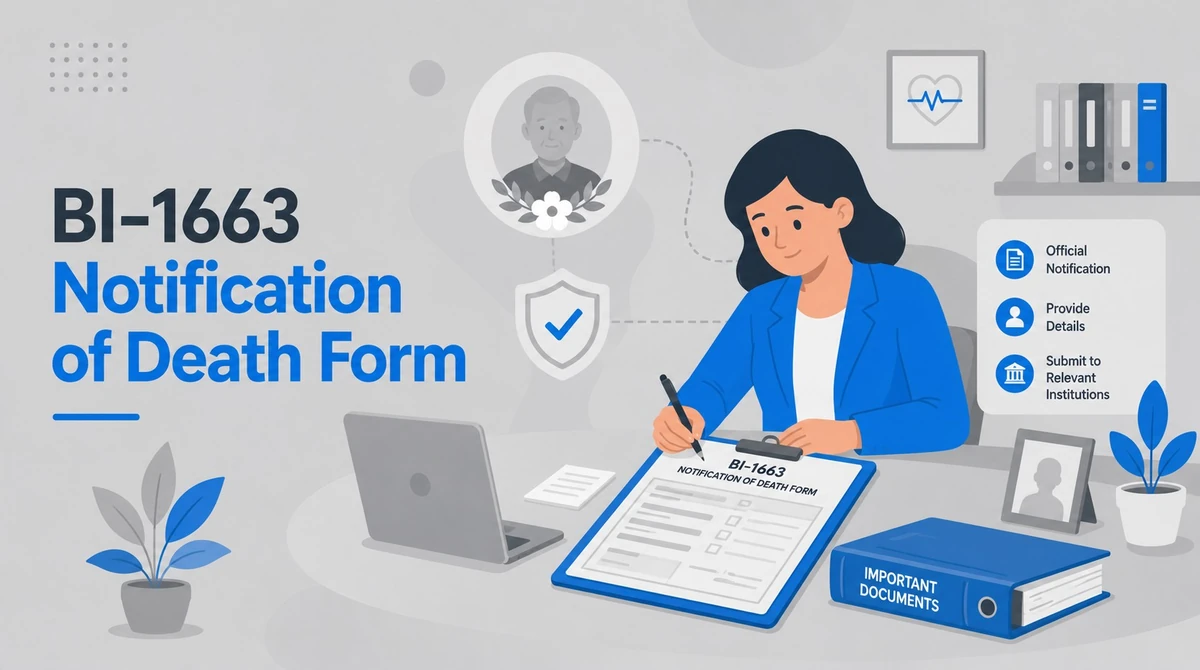
The BI-1663, also written DHA-1663, is the Notification of Death or Still Birth form. It is the legal form used to record a death on the National Population Register. Once it is accepted, the death is registered, the deceased’s identity number is flagged as deceased, and Home Affairs can issue the death certificate.
It is important to be clear about what the BI-1663 is not. It is not the death certificate itself. It is the notification that triggers the certificate. The form stays on file at Home Affairs, and what you walk away with is the certificate, which is covered further down.
Who completes it
The BI-1663 is filled in by more than one person, which is why it cannot simply be completed at home.
The attending medical practitioner or professional nurse completes the medical section, certifying the cause of death. Where the death is from unnatural or unknown causes, a forensic pathologist completes the medico-legal section instead. The informant, usually a close family member, completes the personal-particulars section and provides their own details and relationship to the deceased. The funeral undertaker completes the undertaker section and, in practice, manages the whole process, including taking the fingerprints of the deceased, the informant, and the undertaker.
In real life, the hospital or the funeral undertaker drives this. The family’s practical role is to confirm the deceased’s identity and to give the informant’s details. If the doctor who must complete the medical section is not immediately available, the funeral undertaker handles the delay, as they do this routinely.
The deadline
A death should be reported as soon as possible. South African law expects a death to be reported within about three days, and burial cannot legally proceed until the death is registered and a burial order is issued. If registration is delayed beyond the expected period, Home Affairs may require a sworn affidavit explaining the reason for the late report, so it is best not to let it drift.
What you need
To register the death you will generally need the completed BI-1663 including the medical certificate of cause of death, the deceased’s South African identity document, which Home Affairs retains, the informant’s identity document, and the marriage certificate where the deceased was married. For an unnatural death, a South African Police Service case number and the forensic pathologist’s input are also required.
You submit the completed form at a Home Affairs office, at a police station in some remote areas, or at a South African embassy or consulate if the death happened abroad.
What happens after it is lodged
Once the BI-1663 is accepted, a short sequence follows. Home Affairs approves the registration and records the death on the population register. A Death Report, form BI-1680, is issued as confirmation that the death has been registered. A burial order, form BI-14, is issued, and no burial or cremation may legally take place until this is in hand. The abridged death certificate is then issued, free of charge, usually the same day at the counter.
If you later need the full version for use overseas, that is a separate application on form BI-132. See the unabridged death certificate guide for when you actually need it.
Natural and unnatural deaths
The process differs depending on the cause. For a natural death, the attending medical practitioner certifies the cause and the registration proceeds in the normal way. For an unnatural death, meaning an accident, suspected foul play, suicide, or an unknown cause, the South African Police Service must be notified and a forensic pathologist conducts a medico-legal investigation. Home Affairs will not approve the registration until that process is complete, which can add time before the certificate is issued.
Death of a South African abroad
When a South African citizen dies in another country, the death is reported to the nearest South African embassy, mission, or consulate, or at a Home Affairs branch on return to South Africa. At a mission the form is completed by an official rather than a local doctor. Home Affairs in Pretoria then registers the death and issues the South African death certificate, which typically adds several weeks to the timeline.
Common mistakes that cause rejection
A handful of errors account for most rejected or delayed registrations. The most frequent are an incorrect thirteen-digit identity number, which can link the record to the wrong person, a name that does not match the deceased’s identity document exactly, a missing medical certificate of cause of death, and a late report lodged without the affidavit explaining the delay. Because all fields are compulsory and the form must be legible and in block letters, an incomplete or unclear form can be treated as invalid.
Three things people confuse with the BI-1663
Clearing these up saves a lot of wasted effort.
The death certificate is not the BI-1663. The BI-1663 registers the death; the death certificate is the document you actually submit to insurers, pension funds, banks, and the Master of the High Court.
A newspaper death notice is not the BI-1663. An obituary or public announcement has no legal standing and does nothing to register the death.
The J294 death notice is a different form again. That one is used to report the deceased estate to the Master of the High Court, not to register the death with Home Affairs. For that side of the process, see the master’s office contact details and the letter of executorship guides.
Where this fits
Registering the death and collecting the certificate is the first step. From there the estate is reported to the Master and wound up. See the letter of executorship for larger estates, the letter of authority for estates of R250,000 or less, and what happens to the money when someone dies for the bigger picture.
Methodology note
This guide reflects the death registration process under the Births and Deaths Registration Act 51 of 1992, including the BI-1663 notification of death, the roles of the medical practitioner, informant, and funeral undertaker, the requirement to report a death promptly, the issue of the Death Report (BI-1680), burial order (BI-14), and abridged death certificate, and the separate handling of unnatural deaths and deaths abroad. Forms, form numbers, and timeframes are set by the Department of Home Affairs and can change. Always confirm the current forms and requirements with Home Affairs or the funeral undertaker before relying on them.
Disclaimer
This article is general information on registering a death in South Africa. It is not legal advice and does not create any professional relationship. Procedures, forms, and timeframes change over time and each case differs. Confirm the current requirements with the Department of Home Affairs or a qualified professional.
Frequently asked questions
What is the BI-1663 form?
The BI-1663, also written DHA-1663, is the Notification of Death or Still Birth form. It is the legal form used to register a death on South Africa’s National Population Register. Once it is accepted, Home Affairs issues the death certificate. The BI-1663 itself is the registration form, not the certificate.
Who completes the BI-1663 form?
Several people. The attending medical practitioner or professional nurse completes the medical section certifying the cause of death, or a forensic pathologist does so for an unnatural death. The informant, usually a close family member, completes the personal particulars, and the funeral undertaker completes the undertaker section and manages the process, including taking fingerprints.
How long do you have to register a death in South Africa?
A death should be reported as soon as possible, and the law expects it within about three days. Burial cannot legally take place until the death is registered and a burial order is issued. A report lodged late may require a sworn affidavit explaining the delay.
What is the difference between a BI-1663 and a death certificate?
The BI-1663 is the form that registers the death with Home Affairs. The death certificate is the document issued as a result, and it is what you submit to insurers, pension funds, banks, and the Master of the High Court. You need the certificate, not the BI-1663, for those purposes.
What happens after the BI-1663 is submitted?
Home Affairs approves the registration and records the death on the population register. A Death Report (BI-1680) is issued as confirmation, a burial order (BI-14) is issued so the burial can proceed, and the abridged death certificate is issued free of charge, usually the same day.
Do I need a funeral undertaker to register the death?
In practice the funeral undertaker or the hospital manages the BI-1663, including the fingerprints and much of the paperwork. A death can also be reported directly by an authorised person at a Home Affairs office, a police station in remote areas, or a South African mission abroad, but the medical certificate of cause of death from a practitioner is still required.
Related pages
- Unabridged Death Certificate in South Africa
- Master of the High Court Contact Details
- Letter of Executorship in South Africa
- Letter of Authority for a Deceased Estate
- What Happens to the Money When Someone Dies