



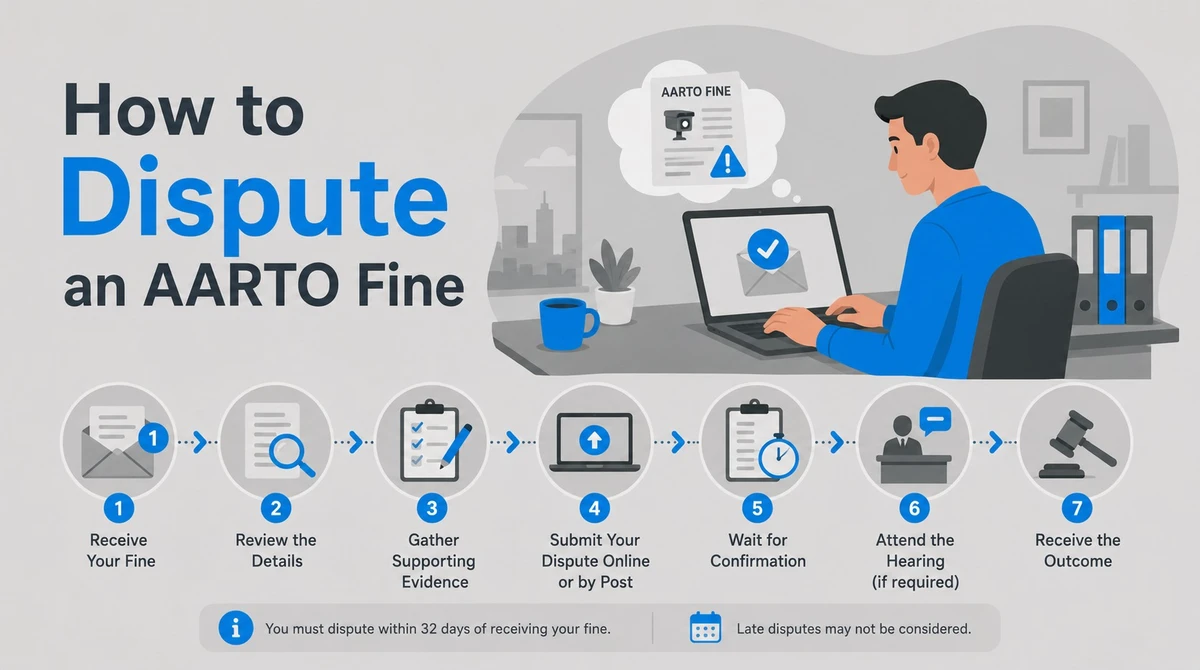
If you believe an AARTO fine is wrong, you do not have to pay it. Under the Administrative Adjudication of Road Traffic Offences (AARTO) Act, you can formally contest an AARTO infringement notice by making a representation. It is the correct legal route, and it has one powerful effect most motorists do not realise: a valid representation freezes the entire process while it is being considered.
This page explains what a representation is, the grounds that actually work, and the four steps to submit one before your deadline runs out.
What a representation is
A representation is a written objection to an infringement, submitted on form AARTO 08. You set out the reasons you should not be held liable, and an independent representations officer at the Road Traffic Infringement Agency (RTIA) considers it and decides whether to uphold or reject it.
It is not the same as simply refusing to pay. Ignoring a fine lets it escalate. A representation actively pauses the escalation and puts your objection on the record.
The freeze: why a representation is your strongest move
The moment you submit a valid representation, the RTIA is legally prohibited from progressing your matter. It cannot issue a courtesy letter or an enforcement order while your representation is under review. In practice, this means a timely representation protects you from the eNaTIS block that would otherwise stop you renewing your licence.
This is why acting early matters. A representation made while the fine is still an infringement notice stops the clock before any fees are added.
When you can make a representation
You can submit a representation within 32 days of being served, at the infringement notice stage, and you can still submit one within 32 days of an AARTO courtesy letter. What you cannot do is wait until an enforcement order has been issued and expect a fresh representation to undo it. At that stage your route changes to applying for revocation of the enforcement order instead, within its own 32-day window.
Grounds that actually work
A representation succeeds on facts, not on excuses. Grounds that carry weight include:
- You were not the driver or the vehicle was not yours at the time.
- The vehicle had been sold, and ownership had been transferred, before the offence.
- You have already paid the fine, or it was issued in error or duplicated.
- The notice was not served correctly, or was issued outside the lawful time period, for example a camera notice issued more than 40 days after the offence.
- The offence details are wrong: wrong registration, wrong location, or a clear case of mistaken identity.
Grounds that generally do not work are that you cannot afford the fine, that you did not know about the rule, or that you simply disagree with the speed limit. If you want to admit the offence but explain your circumstances, that is a different route from disputing liability.
How to submit a representation: four steps
- Get form AARTO 08. It is available from the official AARTO portal and from issuing authorities. Fill in your details, the infringement notice number and your grounds.
- Set out your reasons clearly, with evidence. Attach whatever supports your case: proof of sale, proof of payment, photographs, or anything showing the notice was defective. A represention with evidence is far stronger than a bare assertion.
- Have it signed before a Commissioner of Oaths. A representation must be commissioned to be valid. Police stations and many banks and Post Office branches offer this at no charge.
- Submit it within 32 days and keep your proof. Lodge it before your deadline and save the submission receipt or confirmation. That receipt is your evidence that you acted in time, which matters if the system escalates your matter in error.
What happens after you submit
The representations officer either upholds your representation, in which case the infringement is cancelled, or rejects it. If it is rejected, you are notified and your options reopen: you can pay the penalty, or you can elect to be tried in court.
One important caution for 2026: the Appeals Tribunal, which is meant to hear appeals against rejected representations, is currently not operational. That means the usual independent appeal step may not be available if your representation is turned down, so make your representation as strong and well-evidenced as you can the first time, and keep every record.
Frequently asked questions
How do I dispute an AARTO fine? You submit a representation on form AARTO 08, setting out why you should not be liable, signed before a Commissioner of Oaths, within 32 days of being served. An independent representations officer at the RTIA then decides whether to uphold or reject it.
Does disputing an AARTO fine stop it escalating? Yes. A valid representation legally freezes the process. The RTIA cannot issue a courtesy letter or enforcement order while your representation is under review.
What are good grounds to dispute an AARTO fine? Strong grounds include not being the driver, the vehicle having been sold, the fine already being paid or issued in error, or the notice not being served correctly or within the lawful time period.
How long do I have to dispute an AARTO fine? You have 32 days from the date you are served, at both the infringement notice and the courtesy letter stages. After an enforcement order is issued, you must apply for revocation within 32 days instead.
What happens if my representation is rejected? You are notified and can then pay the penalty or elect to be tried in court. Note that the Appeals Tribunal that would normally hear appeals is currently not operational, so keep all your records.