



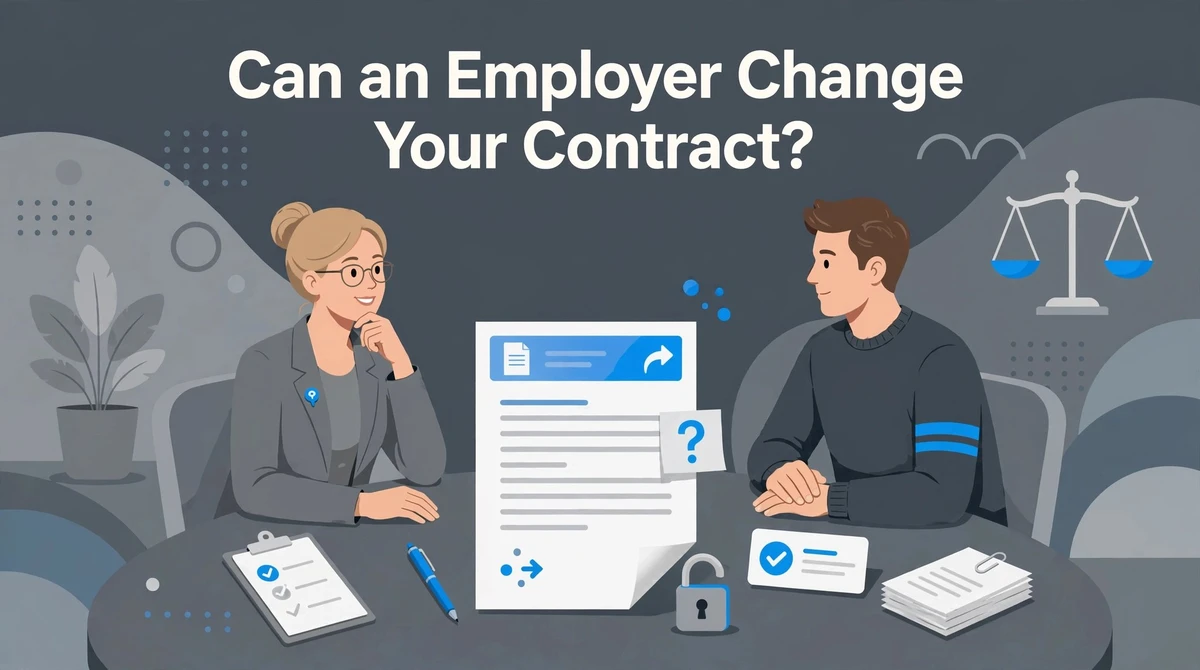
A contract of employment is a contract. No party to a contract can unilaterally impose new terms on the other. Not your employer, and not you.
That is the whole answer, and it holds even when the change seems small, even when everyone else has signed, and even when your employer calls it a “restructure” or a “policy update.”
What matters next is what you do about it, because how you respond determines whether you keep the right to object.
What counts as a change to your contract
Anything that alters a term or condition of your employment:
- Your pay, or how it is structured
- Your hours, shifts or days of work
- Your place of work
- Your duties, if they change materially
- Your benefits: medical aid, provident fund, allowances, bonuses that have become contractual
- Adding standby, call outs, or a requirement to be available after hours. See standby allowance
- Removing a paid benefit your contract or policy gave you
What does not count is a reasonable operational instruction within the scope of what you already agreed. Being asked to cover a different task for a week is management. Being permanently reassigned to a materially different job is a change to your contract.
The important distinction
Your employer can generally change workplace rules and policies unilaterally, because those are not contractual terms. A new dress code, a new email policy, a new reporting line.
But the moment a change touches remuneration, hours, or the substance of what you were hired to do, it needs your agreement.
The grey area is where a policy has been applied so consistently and for so long that it has become a term of your employment by custom. A bonus paid every December for fifteen years is not easily withdrawn as merely discretionary.
Your employer can ask, and can consult
None of this means your employer is stuck forever.
An employer facing genuine operational pressure can propose changes, consult about them, and try to reach agreement. If you refuse, your employer may in some circumstances retrench you on operational grounds and offer re-employment on the new terms, which must be run as a proper section 189 process.
That is a lawful route. It is also a slow and expensive one, which is exactly why so many employers try to skip it and simply impose the change instead.
What to do when it happens
1. Do not just accept it. If you keep working on the new terms without objecting, over time you may be taken to have accepted them by conduct. Silence is dangerous.
2. Object in writing, immediately. Short and factual. State the term as it was, state the change, state that you did not agree to it, and ask your employer to restore the original terms or to consult properly.
3. Keep working under protest. Use those words. “I continue to work under protest and without prejudice to my rights.” This preserves your objection while protecting your income.
4. Do not resign. Resigning forfeits your severance, your UIF and your ability to challenge anything. A claim for constructive dismissal puts the burden of proof on you and is genuinely hard to win.
5. Refer a dispute. A unilateral change to terms and conditions of employment can be referred to the CCMA, and you can seek an order requiring your employer to restore the original terms while the dispute is resolved. This is a real and underused remedy.
6. If it is about money, you may also have a monetary claim under section 73A of the BCEA for the shortfall.
The deadline
Different from an unfair dismissal. An unfair labour practice must be referred within 90 days of the act complained of, not 30.
Do not let it drift. The longer you work on the new terms without objecting, the stronger your employer’s argument that you accepted them.
The threshold does not save your employer
Earning above the BCEA earnings threshold of R269 600.90 a year removes your statutory right to overtime pay, Sunday pay and meal intervals. See overtime rate.
But it does not allow your employer to rewrite your contract. If your contract promises you overtime pay, that promise is enforceable regardless of what you earn, and it can only be removed by agreement.
High earners often assume the threshold means their employer can do as it likes. It does not. Your contract still binds them.
Frequently asked questions
Can my employer change my contract without my consent? No. Terms and conditions of employment cannot be changed unilaterally. Your employer may propose and consult, but it needs your agreement.
Can my employer reduce my salary? Not without your agreement. A unilateral pay cut is a change to a fundamental term and can be referred to the CCMA.
Can my employer change my working hours? Not unilaterally, if hours are a term of your contract. A reasonable operational adjustment within your existing terms is different from a permanent change.
What if I keep working after the change? Working on without objecting can, over time, be treated as acceptance. Object in writing and state that you are working under protest.
Should I resign if my employer changes my contract? No. Resigning forfeits severance and UIF, and a constructive dismissal claim is hard to win. Object, work under protest, and refer a dispute.
How long do I have to challenge a unilateral change? An unfair labour practice must be referred to the CCMA within 90 days of the act complained of.
Can my employer change a policy? Generally yes, since policies are not contractual terms. But a long standing practice can become a term of employment by custom.
Sources
- CCMA, Frequently asked questions
This is general information, not legal advice.