


Sit the full test below. Sixty four questions, ninety minutes, three sections scored separately on the official pass marks, exactly like the real thing at the testing centre. No signup, no email, no payment. You see your score the moment you finish, and every question you got wrong with the right answer next to it.
K53 Learner’s Licence Practice Test
Free, no signup, instant result. Three sections scored separately, exactly like the real test at the DLTC.
Which code are you writing?
Choose your test
How the real test is scored
You must pass every section on its own. Ace two sections and fail one by a single mark, and you have failed the whole test. That is why this tool scores each section separately instead of giving you one percentage.
Question
Result
Pass
Your score by section
Every question you got wrong
Practice tool only. Questions are written from the official SA Learner Driver Manual published by the RTMC, in three volumes: Rules of the Road, Manual on Road Traffic Signs, and Vehicle Controls. Signs are drawn as simplified representations for study purposes. The official test is set by the Department of Transport and the question you get on the day will be worded differently.
Quick facts
| Item | Detail |
|---|---|
| Sections | Rules of the road, road signs and markings, vehicle controls |
| Answers per question | Three |
| Time allowed | 90 minutes |
| Rules of the road | 28 questions, pass 22 |
| Road signs, signals and markings | 28 questions, pass 23 |
| Vehicle controls | 8 questions, pass 6 |
| Must you pass every section? | Yes. One failed section fails the whole test. |
| Code 1 | Motorcycle. Answers the motorcycle controls section |
| Code 2 | Light motor vehicle up to 3 500 kg |
| Code 3 | Heavy motor vehicle above 3 500 kg |
| Learner's licence validity | 24 months, and it cannot be renewed |
| Minimum age | 16 for a motorcycle up to 125 cc, 17 for a light motor vehicle, 18 for heavy |
The trap that fails most people
You do not get one score. You get three.
Get 27 out of 28 on the rules, 28 out of 28 on the signs, and 5 out of 8 on vehicle controls, and you have failed. Sixty out of sixty four correct, and you go home and pay again.
Vehicle controls is the section people throw away. It is only eight questions, it feels like the easy one, and you are allowed to miss exactly two. Most candidates spend all their study time on road signs, walk in confident, and get caught by a question about which controls you use to pull away.
The test above scores each section on its own for exactly this reason. A single percentage would flatter you and teach you nothing.
What the test actually looks like
Three sections. Every question has three possible answers, and only one is correct. You have ninety minutes.
The first two sections are the same for everyone: rules of the road, and road signs, signals and road markings. The third section depends on the code you applied for. Motorcycle candidates answer the motorcycle controls section. Light and heavy motor vehicle candidates answer the vehicle controls section. That is why the question counts you see quoted online contradict each other so wildly. Those sites are quoting different codes without saying so.
Most testing centres now run the test on a computer rather than on paper. The pass rate fell sharply when that happened, and the reason is worth understanding: the computerised system draws from a large bank and mixes the questions, so a memorised answer sheet from a WhatsApp group is worth nothing. You have to know the material.
Where these questions come from
The Road Traffic Management Corporation publishes the official SA Learner Driver Manual, free, in three volumes: Rules of the Road, the Manual on Road Traffic Signs, and the Vehicle Controls Manual. Those three volumes are the syllabus. Everything the test can ask you is in them.
Every question in the tool above is written from those manuals. Not copied from another practice site, not scraped from a PDF doing the rounds on WhatsApp, and not from a study pack that was last updated in 2019.
There is a detail in the Vehicle Controls manual that most practice tests ignore completely. The official controls questions do not ask you what a clutch does. They show you a numbered diagram and ask which control is used to disengage the engine from the gearbox. The answer is a number. Our controls section works the same way, on the same component numbering the Department uses, so you are practising the format and not just the fact.
The manual also uses the combination format: three statements marked (i), (ii) and (iii), and you must pick the correct combination. Those are in here too, because they catch people out.
The road signs are drawn as clean vector graphics rather than photographed off a website, which is why they stay sharp on a phone.
Why this one is free
Look at what happens when you search for a K53 test.
One site sells you the papers, and charges R300 an hour if you want someone to explain them. Two put the test behind a thirty day subscription. Two more run a free test as the front door to a paid masterclass. One makes you enter your age and email address before it will show you your own score, and dangles a phone giveaway to make that feel like a good deal.
Not one of them simply lets you write a test and see how you did.
This one does, because this site earns from advertising rather than from your email address, so there is no reason to hold your score hostage. Take it as many times as you like. The questions and the order change each time.
How to actually pass
Sit the full test, not the quick one, at least twice. The quick practice is for a spare five minutes. The full test tells you the truth, because it applies the section pass marks. The tool remembers what it has already asked you, so a second sitting pulls fresh questions rather than the same ones again.
Study the section you failed, not the one you enjoy. People re-sit road signs because road signs are satisfying. Go back to the section that let you down.
Learn the reason, not the answer. The computerised system rephrases. If you know that the two second rule exists because your stopping distance is your reaction distance plus your braking distance, you will answer correctly no matter how the question is worded. If you memorised "two seconds", a rephrased question will beat you.
Read the review at the end. The tool shows you every question you got wrong with the correct answer. That list is your study plan.
Do not skip vehicle controls. Eight questions, two mistakes allowed. It is the cheapest section to master and the most common one to fail.
What you need on the day
You apply at a Driving Licence Testing Centre on form LL1, which they hand you there. Bring your South African identity document, two identity photographs, proof of your residential address that is not older than three months, and the application fee. If you are under 18, an adult you live with must confirm your address in an affidavit signed at a police station or before a commissioner of oaths.
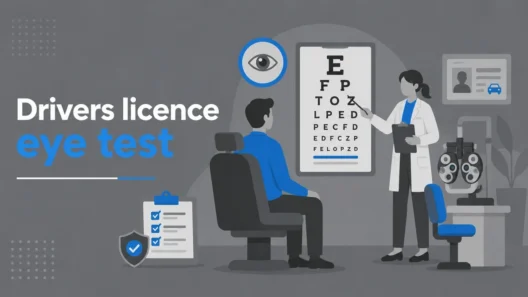
You also do an eye test at the centre.
Pass, and your learner's licence is valid for 24 months. It cannot be renewed or extended. If you have not passed your driving test inside that window, you sit the learner's test again from scratch.
Frequently asked questions
How many questions are in the K53 learners test? Sixty four for a light motor vehicle: 28 on the rules of the road, 28 on road signs, signals and markings, and 8 on vehicle controls. The controls section changes depending on whether you applied for a motorcycle or a vehicle code.
What is the pass mark for the learners licence test? There is no single pass mark. You need 22 out of 28 on the rules of the road, 23 out of 28 on road signs, and 6 out of 8 on vehicle controls, and you must clear each section on its own.
What happens if I fail one section? You fail the whole test, even if your total score is high. This is the single most common reason people are surprised by a fail.
How long does the K53 learners test take? You are given 90 minutes. Most people finish well inside it, but there is no prize for speed, and rushing is how you misread a question.
Is this practice test free? Yes. No registration, no email address, no payment, and no limit on how many times you take it.
How many questions are in the bank? Enough that a second sitting gives you a fresh set. The tool tracks what it has already asked and draws new questions before it repeats anything.
Are these the real exam questions? No, and nobody who claims to have them is telling you the truth. These questions are written from the official RTMC Learner Driver Manual, which is the syllabus the real questions are drawn from. The wording on the day will be different. That is the point of understanding the material rather than memorising a sheet.
How long is a learners licence valid? Twenty four months from the date it is issued. It cannot be renewed. If it expires, you write the learners test again.
What is the minimum age for a learners licence? Sixteen for a motorcycle not exceeding 125 cc, seventeen for a light motor vehicle, and eighteen for a heavy motor vehicle or a motorcycle above 125 cc.
Can I drive alone with a learners licence? No. A learner driving a light or heavy motor vehicle must have a licensed driver seated next to them. A motorcycle learner rides alone but may not carry a passenger.
Methodology
The questions in the practice test are written from the official SA Learner Driver Manual published by the Road Traffic Management Corporation, in three volumes: Rules of the Road, the Manual on Road Traffic Signs, and the Vehicle Controls Manual. The underlying law is the National Road Traffic Act 93 of 1996 and its regulations.
The section structure and pass marks reflect the standard allocation applied to the light motor vehicle test: 28 questions on rules of the road with a pass mark of 22, 28 questions on road signs, signals and markings with a pass mark of 23, and 8 questions on vehicle controls with a pass mark of 6, each section passed separately. The vehicle controls section is code specific, which is why published question counts differ between sources.
Road signs and the numbered controls diagrams are original vector drawings, simplified for study purposes. They are representations, not reproductions of the gazetted artwork. The control numbering follows Section 3 of the Learner Driver Manual.
Related
- Police clearance certificate cost: what the other government document you will eventually need costs
- Unabridged birth certificate cost: what Home Affairs charges, and how long it takes
Disclaimer
This is a practice tool, not the official test, and Searchis is not affiliated with the Department of Transport, the RTMC or any driving licence testing centre. Passing this test does not guarantee you will pass the official one.
The official test is set by the Department of Transport and administered at Driving Licence Testing Centres. Question counts, pass marks and procedures are amended from time to time, and may vary by testing centre and by the code you apply for. Confirm the current requirements with your testing centre when you book.