




A mutual separation agreement, or MSA, is a contract in which you and your employer agree to end the employment relationship by consent. Nobody is dismissed. Nobody resigns, exactly. You both simply agree it is over, usually in exchange for a payment.
They are offered constantly, and they are signed far too quickly. Here is what is actually on the table.
An MSA is not a retrenchment
This is the whole point of the document, from your employer’s side.
A retrenchment is a dismissal. It obliges the employer to run a consultation process, disclose its reasoning, justify its selection criteria, and pay statutory severance. It leaves you with a right to challenge the outcome at the CCMA.
A mutual separation is a consensual termination. None of those obligations apply. Your employer avoids the process, avoids the risk, and buys certainty. That certainty is what you are selling.
That is not automatically a bad deal. It is a bad deal if you did not know that is what you were selling.
Risk 1: your UIF
The Labour Court has warned employers about exactly this, and it is the most serious consequence of signing.
Because a mutual separation is not a dismissal, an employee who signs one may not be eligible to claim UIF unemployment benefits at all.
The reason for termination goes on your UI-19 form. A mutual separation or voluntary severance should be recorded there as a voluntary severance package, not as a retrenchment. Employers have been cautioned that misrepresenting the reason on a UI-19 can amount to a criminal offence under the Unemployment Insurance Act, which means a sympathetic manager cannot simply tick the retrenchment box for you as a favour.
So before you sign anything, ask one question in writing: what will you record as the reason on my UI-19?
If the answer costs you your UIF, the separation payment needs to be large enough to cover the benefit you are giving up. Read how to claim UIF and the UI-19 form so you know what that benefit is worth before you trade it away.
Risk 2: the R550 000 tax break may not apply
This is where the money quietly moves, and it is worth understanding properly.
A severance benefit is defined in the Income Tax Act. It is taxed on the retirement and severance lump sum table, where the first R550 000 is taxed at 0 percent. But it only qualifies if the termination happened because the employer ceased or intended to cease trading, or because of a general reduction in staff. In other words, because of a genuine retrenchment.
SARS’s own IRP3(a) guidance draws a line between voluntary and involuntary retrenchment. After representations from the tax profession, SARS accepted that a voluntary severance package taken inside a real retrenchment process should still get the severance table, on the basis that the underlying reason for the termination is still the employer’s operational requirements.
But a mutual separation with no underlying retrenchment is a different animal. There the payment is not a severance benefit at all. It is ordinary income, taxed at your marginal rate, which can reach 45 percent.
And you cannot fix this by asking nicely. Employers are not permitted to mischaracterise the nature of a payment in order to win you tax relief. If your employer tells you they will “just call it severance” so you get the tax break, they are proposing to misrepresent the position to SARS, and it is your tax return that carries the consequence.
The practical test is roughly this: has your employer already decided, in principle, to retrench? If yes, and you are stepping forward voluntarily inside that process, the severance table can apply. If no, and this is simply a negotiated exit, expect normal rates.
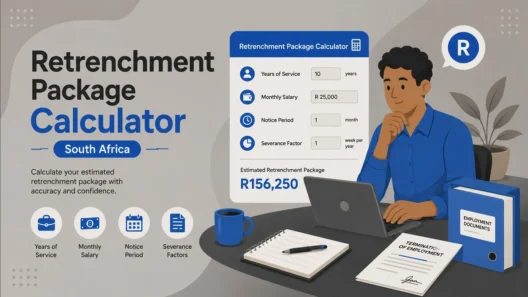
Model both outcomes with the retrenchment package calculator. The difference on a R400 000 payment is well over R100 000.
Risk 3: you waive your CCMA recourse
Almost every MSA contains a full and final settlement clause and a waiver of claims. Once signed, you cannot go to the CCMA and say the process was unfair, because there was no process and you agreed there did not need to be one.
If you believe you are being pushed out for reasons that have nothing to do with the business, the MSA is the document that closes that door. Do not sign it on the same day you are handed it.
Risk 4: severance is not automatic
Section 41 of the BCEA gives you one week per completed year on a retrenchment. It does not apply to a consensual termination.
Whatever appears in the MSA is whatever you negotiated. There is no statutory floor underneath it. If the number on the table is less than what a real retrenchment would have paid you, say so, and use the calculator to show your working.
Risk 5: the clauses nobody reads
Beyond the money, check for:
- Restraint of trade. An MSA is a convenient place to slip one in, or to keep an existing one alive.
- Non-disparagement. Usually fine, but read whether it is mutual or one way.
- Confidentiality. Check whether it stops you telling a future employer why you left.
- Reference wording. Get the exact wording of the reference in the agreement itself, not as a verbal promise.
- Retirement fund and medical aid. Confirm the last date of contribution and what happens to your fund.
What to do before you sign
- Ask what goes on the UI-19. In writing.
- Ask whether the employer has decided to retrench. The answer determines your tax treatment.
- Ask for the IRP3(a) tax directive classification they intend to use.
- Compare the offer to a real retrenchment, using the calculator, on a net basis.
- Take it away. You are entitled to time and to advice. An employer pressing you to sign in the room is telling you something about the deal.
- Get a labour lawyer or your union to read it. An hour of advice is cheap against a six figure decision.
If what is really happening is a restructure, you may be better off insisting on a proper section 189 process and taking the severance pay that comes with it. And if you are weighing this against simply walking away, read retrenchment vs resignation first.
Frequently asked questions
Can I claim UIF after a mutual separation agreement? Often not. A mutual separation is not a dismissal, and it is recorded on the UI-19 as a voluntary severance package. Ask your employer what reason they will record before you sign.
Is a mutual separation payment taxed as severance? Only if the termination qualifies as a severance benefit, which broadly means it arose from the employer ceasing operations or reducing staff. A negotiated exit with no underlying retrenchment is taxed as normal income.
Do I get severance pay in a mutual separation agreement? Not automatically. Section 41 of the BCEA applies to retrenchment, not to consensual termination. Whatever you get is what you negotiated.
Can I take a mutual separation agreement to the CCMA? Generally no. These agreements almost always include a waiver of claims and a full and final settlement clause.
Is a mutual separation agreement the same as voluntary retrenchment? No, and the difference is expensive. A voluntary severance package inside a genuine retrenchment process can still attract the severance tax table and UIF eligibility. A bare mutual separation may attract neither.
Sources
This is general information, not legal or tax advice. A mutual separation agreement is a binding waiver of rights. Have it reviewed before you sign.