


South Africa uses eight driving licence codes: A1 and A for motorcycles, B for cars and light vehicles, EB for a light vehicle with a heavy trailer, C1 and C for heavy vehicles, and EC1 and EC for articulated vehicles. The old numbered codes still map across: Code 8 is now Code B, Code 10 is now Code C1, and Code 14 is now Code EC. Your code tells you exactly which vehicles you may legally drive.
Use the checker below to see what your code covers, then read on for the full breakdown of every code, the weight limits, the minimum age, and when you also need a professional driving permit.
See what your code lets you drive
Choose your driver’s licence code to see the vehicles you may drive, the minimum age, the old code name, and whether a professional driving permit applies.
You may drive
Minimum age
Also covers
Driving for reward
Codes reflect the National Road Traffic Act and its regulations. A learner’s licence uses Code 1 (motorcycle), Code 2 (light vehicle) or Code 3 (heavy vehicle).
Quick facts: driving licence codes at a glance
| Code | What you may drive | Minimum age | Old code |
|---|---|---|---|
| A1 | Motorcycle up to 125cc | 16 | – |
| A | Motorcycle over 125cc | 18 | – |
| B | Light vehicle, GVM up to 3,500 kg | 18 | Code 8 |
| EB | Light vehicle with a heavy trailer | 18 | – |
| C1 | Heavy vehicle, GVM 3,500 to 16,000 kg | 18 | Code 10 |
| C | Extra heavy vehicle, GVM over 16,000 kg | 18 | – |
| EC1 | Medium articulated vehicle | 18 | – |
| EC | Extra heavy articulated vehicle | 18 | Code 14 |
GVM means gross vehicle mass, the maximum weight of the vehicle when fully loaded.
Motorcycle codes: A1 and A
The two motorcycle codes are split by engine size. Code A1 covers a motorcycle, motor tricycle or quadrucycle with an engine of 125cc or less, with or without a sidecar. It is the only code you can hold from the age of 16, which makes it the entry point for scooters and small commuter bikes.
Code A covers any motorcycle with an engine larger than 125cc, and you must be 18 to hold it. A Code A licence also allows you to ride the smaller A1 machines.
Code B: the everyday driver's licence
Code B, still widely called Code 8, is the most common driving licence in South Africa and the one most people mean when they talk about getting their licence. It covers a light motor vehicle with a gross vehicle mass of 3,500 kg or less, which is almost every ordinary car, bakkie and light van on the road. You may also draw a trailer of up to 750 kg on a Code B.
You must be 18 to hold a Code B, and it does not cover motorcycles or agricultural vehicles. If you drive a Code B vehicle as a taxi or otherwise carry fare-paying passengers, you also need a professional driving permit on top of the licence.
Heavy vehicle codes: C1 and C
Heavier rigid vehicles need a C code. Code C1, formerly Code 10, covers a heavy motor vehicle with a gross vehicle mass between 3,500 kg and 16,000 kg, such as a small truck or a large delivery vehicle, and may draw a trailer up to 750 kg. Code C1 is the workhorse licence for the logistics and delivery sector, and it is also the licence tied to many well paid driving roles. You can see what those roles pay on the Code 10 driver salary page.
Code C steps up to an extra heavy motor vehicle with a gross vehicle mass over 16,000 kg, again with a trailer of up to 750 kg. A Code C licence also covers Code B and Code C1 vehicles.
Articulated codes: EB, EC1 and EC
An articulated vehicle has a permanent or semi-permanent pivot joint that lets it turn more sharply, such as a truck-and-trailer combination. Three codes cover towing and articulated combinations.
Code EB is for a light motor vehicle drawing a heavy trailer, where the gross combination mass is 3,500 kg or less. This is the code you need to tow a caravan or a boat trailer that pushes past what a plain Code B allows.
Code EC1 covers a medium articulated vehicle with a gross combination mass between 3,500 kg and 16,000 kg, and also allows Code B, Code C1 and Code EB vehicles.
Code EC, formerly Code 14, is the top licence. It covers an extra heavy articulated vehicle with a gross combination mass over 16,000 kg, such as a truck-and-trailer or an interlink, and it also covers Code B, Code C1, Code C, Code EB and Code EC1. It is the licence held by professional long-haul truck drivers.
Old numbered codes explained
Before 1998 the licence system used numbers rather than letters, and many people still refer to their licence by the old number. The three you hear most often map across like this:
- Code 8 is Code B, the standard car licence.
- Code 10 is Code C1, the medium heavy vehicle licence.
- Code 14 is Code EC, the extra heavy articulated licence.
The old numbered codes and the new letter codes refer to the same licences, so a job advert asking for a Code 10 is asking for a Code C1.
Learner's licence codes
A learner's licence uses a separate set of three codes that group vehicles more broadly:
- Code 1 is for motorcycles, motor tricycles and quadrucycles.
- Code 2 is for light motor vehicles with a gross vehicle mass of 3,500 kg or less.
- Code 3 is for heavy motor vehicles with a gross vehicle mass over 3,500 kg.
You must pass the learner's test for the right code before you can take the driving test for the matching driver's licence code. If you are preparing, the K53 learner's test practice questions cover the road signs, rules and controls that come up in the exam.
Restriction codes on your licence
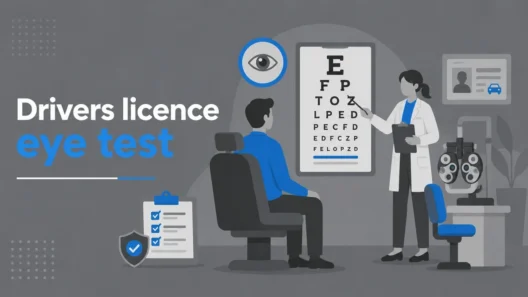
Separate from the vehicle codes, your licence can carry a restriction code that limits how you may drive. The most common is the corrective lens restriction, which requires you to wear your glasses or contact lenses whenever you drive. It is added when you do not meet the vision standard without them, which is checked during the driver's licence eye test.
There is also an automatic transmission restriction. If you take your driving test in an automatic vehicle, your licence is restricted to automatic vehicles only, and you may not drive a manual. If you test in a manual, you may drive both.
How the codes build on each other
The higher codes include the lower ones, so you do not need to hold every code separately. A Code EC licence, for example, covers everything below it. In short, Code B is included by EB, C1, C, EC1 and EC; Code C1 is included by C, EC1 and EC; and the articulated codes stack up to EC at the top. This is why an experienced truck driver on a Code EC can also legally drive an ordinary car.
When you also need a professional driving permit
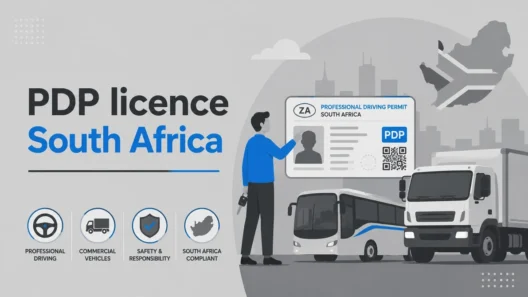
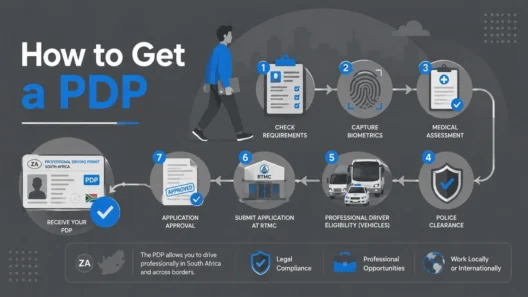
A professional driving permit, or PrDP, is not a licence code. It is a separate permit that sits on top of your ordinary licence, and you need it to drive certain vehicles for reward: goods vehicles over 3,500 kg, vehicles carrying passengers for a fare such as taxis and buses, and vehicles carrying dangerous goods. You can read who needs one and how to apply on the PDP licence page.
How we worked this out
The codes and definitions on this page are based on the National Road Traffic Act 93 of 1996 and its regulations, which set out the vehicle categories, weight limits and minimum ages for each driving licence code, together with the standard mapping between the old numbered codes and the current letter codes. Weight figures are gross vehicle mass for rigid vehicles and gross combination mass for articulated combinations. This page is general information and not a substitute for the requirements confirmed at a driving licence testing centre.
Frequently asked questions
What is a Code B licence? Code B, formerly Code 8, is the standard licence for a light motor vehicle with a gross vehicle mass of 3,500 kg or less, which covers most cars, bakkies and light vans. You must be 18 to hold it.
What is Code 10 in the new system? Code 10 is now called Code C1. It covers heavy vehicles with a gross vehicle mass between 3,500 kg and 16,000 kg. Code 8 is Code B and Code 14 is Code EC.
What licence do I need to drive a truck? For a rigid truck up to 16,000 kg you need Code C1, and over 16,000 kg you need Code C. For a truck-and-trailer or interlink you need Code EC, formerly Code 14. Driving any of these for reward also requires a professional driving permit.
What is the minimum age for a driving licence in South Africa? The minimum age is 18 for all codes except Code A1 for small motorcycles, which you can hold from 16. A learner's licence can be obtained from 16.
Does a higher code include lower codes? Yes. Higher codes include the lower ones, so a Code EC licence also lets you drive Code B, C1, C, EB and EC1 vehicles.